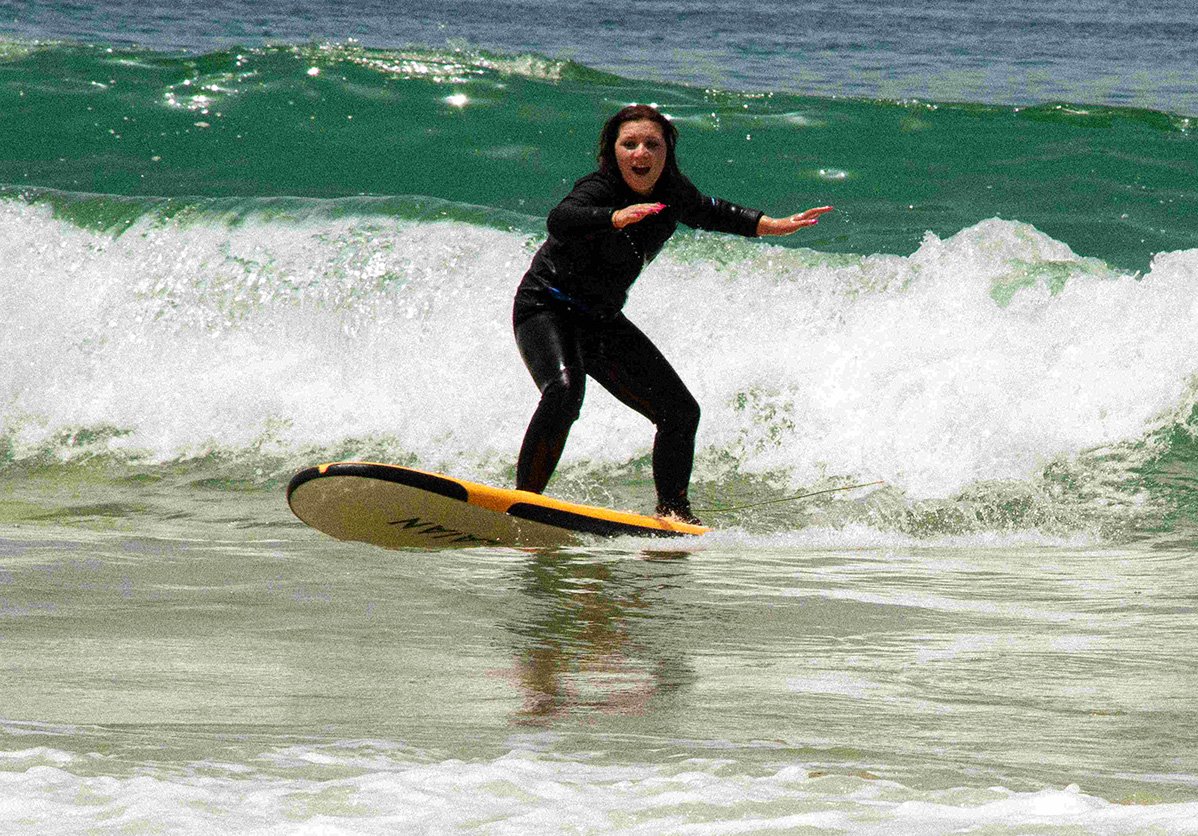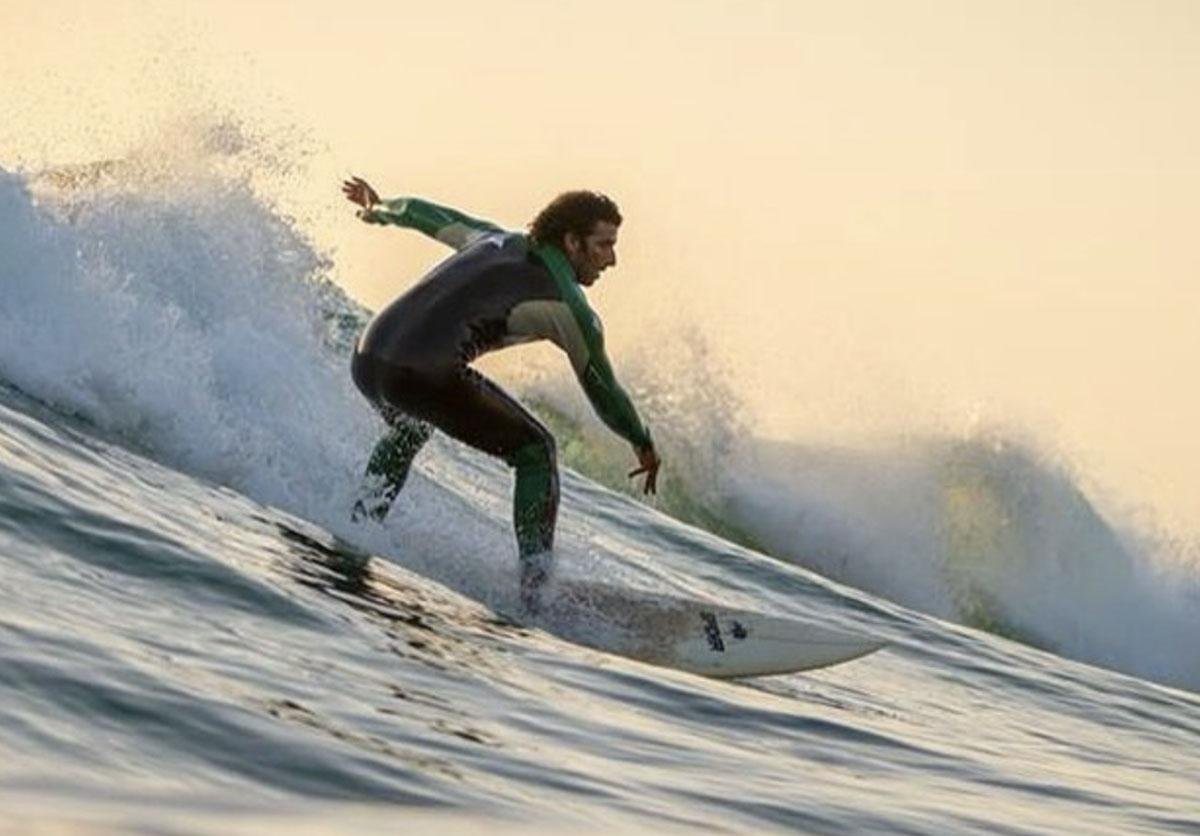
January is one of the months that gives Morocco its winter-surf reputation. North Atlantic swell can wake up the right-hand points around Taghazout, while the coast around Tamraght gives a mobile surf camp several alternatives when an exposed break is too powerful.
That combination makes surfing Morocco in January a strong choice for confident surfers—but it does not make every beach suitable every day. Beginners can still learn, provided their coach chooses a protected spot and adapts the session to the swell, wind and tide. Intermediates need an honest assessment of their paddling, positioning and comfort in moving water.
This guide explains who January suits, what conditions feel like, what to pack, and how a surf week based in Tamraght works when the ocean refuses to follow a fixed itinerary.
Is January a good month for surfing in Morocco?
Yes, if your idea of a good surf trip includes winter swell, a full wetsuit and daily flexibility. The Moroccan National Tourism Office describes October to late March as the more consistent winter swell period. It also says beginners can surf throughout the year, while more experienced surfers generally find their best waves between October and April.
Those two facts belong together. January can produce powerful conditions at exposed points, but the whole coastline does not become an advanced-only zone. Beach orientation, shelter, tide and local bathymetry can make two nearby breaks behave very differently under the same swell.
The useful question is therefore not “Will January be perfect?” No month can promise that. Ask instead whether you will have transport, local knowledge and enough suitable spots to make a good decision each morning. Our Taghazout surf-spots guide shows how many different beach, reef and point options sit along this stretch of coast. For official destination context, see the Moroccan tourism board-sports guide.
Who should choose a January surf trip?
Complete beginners
You can begin surfing in January, but the quality of the decision-making around your lesson matters more than the name of the month. A responsible coach should check the ocean, match the break to the group and change plans when the exposed beaches are unsuitable.
Your first lesson should not happen at a famous rocky point simply because it appears in travel videos. You need manageable white water, room to practise, an appropriate board and a coach close enough to help. Depending on the day, the answer may be a more sheltered beach around Tamraght, a sandy section farther along the coast or a shorter session timed around the tide.
January is a reasonable beginner choice if you are comfortable with these conditions:
- the coach—not a pre-written schedule—chooses the beach;
- you will wear a full wetsuit and may need an extra layer before and after surfing;
- a large swell may mean learning at a protected spot rather than visiting a celebrated wave;
- progress means safe take-offs and control, not claiming a particular break.
For a closer look at this decision, read our beginner guide to winter surfing in Taghazout.
Improving beginners and intermediates
January can be productive for surfers who already catch white-water waves and want to move toward unbroken waves. More swell creates options, but it also exposes gaps in paddling fitness, positioning and ocean awareness. Your surf history in months or years is less useful than what you can do without assistance.
Before booking, be specific. Can you paddle beyond the break independently? Can you identify a safe take-off zone, control your board around other people and choose a wave you can handle? Do you understand priority? Clear answers help a coach put you in the right group and select a useful session rather than an intimidating one.
A good week may alternate between a friendly beach where you work on timing and a more demanding session when the conditions align. That variety is often better for progress than chasing the largest wave available.
Confident intermediate and advanced surfers
January is most naturally suited to surfers who came for Morocco's winter points. Anchor Point, Killer Point, La Source, Boilers and other known breaks can work during the winter swell season. Each one still has its own swell direction, tide, wind, entry, exit and crowd considerations.
A famous name is not a guarantee of a good session. The better decision might be a less exposed reef, a beach break away from the crowd, or waiting for the right part of the tide. If you are unfamiliar with rocky entries and long right-hand points, local guidance can save time and reduce risk.
Our spot directory labels local breaks by level. Use those labels as a starting point, then make the final call from the beach on the day.
January weather, water and daylight
Morocco is warmer than much of Europe in January, but a surf trip on the Atlantic coast is not a tropical-water holiday. Mornings and evenings can feel cool, especially with wind or after a long session. Sunny afternoons may feel mild enough for a T-shirt, so layers work better than one heavy outfit.
Our local Morocco wetsuit guide recommends a 3/2 mm full suit as the minimum for winter. If you get cold easily, prefer dawn patrols or stay in the water for a long time, a warmer suit can be more comfortable. Fit matters: a loose wetsuit flushing cold water will feel worse than a correctly fitted suit with the same thickness.
January days are shorter than spring and summer days. That makes an efficient morning plan valuable. When the surf is good, you do not want to spend half the day comparing distant spots without reliable local information.
What to pack for Morocco in January
Pack for sun, cool transitions and repeated days in salt water:
- Two sets of swimwear: one can dry while you use the other.
- A full wetsuit: bring your preferred winter suit if fit is important, or confirm what your camp provides.
- A hoodie or fleece: useful at breakfast, during surf checks and after sunset.
- A light rain or wind layer: compact protection for changeable coastal weather.
- Sun protection: high-SPF sunscreen, lip balm and a hat; winter sun still reflects off the ocean.
- Footwear with grip: trainers or secure sandals help on village hills and uneven beach access.
- A reusable bottle: easy to carry in the van and refill at the house.
- Surf-aware travel insurance: read the activity, equipment and ability-level exclusions rather than assuming surfing is covered.
You do not need to fly with a board for a coached Nomad week because boards and wetsuits are included. Experienced surfers with a very specific board preference may still want their own equipment. Our guide to choosing a surfboard for Morocco explains the trade-off.
Where do you surf around Tamraght in January?
There is no single January beach. That is the point of using Tamraght as a base: a short section of coast contains spots with different exposure, shape and access. The day's group level and conditions decide the destination.
Beginners may use beach-break options such as Crocro, K17, Devil's Rock or Tamri when the relevant section is appropriate. More experienced surfers may look toward Anchor Point, Killer Point, La Source, Boilers, Mysteries or other reefs and points. This is not a promise that any named spot will work—or be safe—on your dates.
Winter swell can turn an ordinarily friendly-looking place into the wrong choice. Wind can reduce wave quality, a high or low tide can change the entry, and crowds can make a session less useful. Check conditions in person and follow the coach or guide responsible for the group.
What a January week at Nomad looks like
A typical surf day begins with breakfast and a fresh check of swell, wind and tide. Coaches compare options before loading the van. The destination can change from the idea discussed the night before because the latest conditions matter more than a fixed promise.
Nomad's seven-night package includes accommodation, Agadir Airport transfers, six coached surf days, boards and wetsuits, plus breakfast and dinner on six days. The week also includes activities away from the water, giving tired shoulders a break and helping guests see more than the surf line. Check the current details on the Nomad package page before booking.
Lunch is not included, which leaves you free to eat near the day's beach. Back at the house, a shared dinner makes it easy to compare sessions and hear why one group went north while another stayed close to Tamraght.
The routine is structured, but the surfing remains flexible:
- review the forecast and confirm conditions at the coast;
- match the break and equipment to each group's level;
- coach the session with a clear technical focus;
- adjust the next day after seeing how the group handled the water.
January crowds and booking timing
The first days of January overlap with the New Year holiday period, so flights, preferred room types and popular surf accommodation may be tighter than later in the month. If your dates are fixed, booking earlier gives you more choice. If you are flexible, ask what is available rather than assuming every January week feels the same.
Well-known point breaks can attract many surfers when a clean winter swell arrives. Crowds are not only inconvenient; they change the level of awareness and etiquette required. Wait your turn, do not paddle around the priority position, keep control of your board and choose a less pressured option if the lineup is beyond your ability.
Beginners usually have a different objective. A coach can prioritize safe teaching space rather than the wave that is attracting every advanced surfer on the coast.
January or another month?
Choose January if you want the energy of the winter season, are happy in a full wetsuit and value access to several breaks. It is particularly attractive to confident surfers, but adaptable coaching keeps it open to learners.
Consider another month if your priority is the smallest possible surf, warmer water or long summer evenings. Shoulder months may offer a gentler balance for a first trip, while late spring and summer generally bring smaller conditions. Our month-by-month Morocco surf guide helps compare the trade-offs.
If you are deciding between the two deepest winter months, our December surf guide covers the festive-period experience. The difference between two individual weeks, however, can be larger than the difference between the labels “December” and “January.” A live forecast becomes useful only close to arrival.
Frequently asked questions
Can beginners surf Morocco in January?
Yes. Beginners need a qualified coach who can choose a protected, suitable break based on the day's swell, wind and tide. The famous winter point breaks are not beginner classrooms, but the coast provides alternatives.
What wetsuit should I use in January?
A well-fitting 3/2 mm full suit is the usual minimum around Taghazout and Tamraght in winter. Cold-sensitive surfers may prefer a warmer suit. Nomad packages include a wetsuit, so ask the team about available sizing before arrival.
Are the waves guaranteed?
No. January lies within Morocco's more consistent winter swell window, but no camp can guarantee a wave size, a named break or clean conditions on specific dates. Daily spot selection is part of the experience.
Do I need to rent a car?
Not for a coached Nomad package: daily surf transport and Agadir Airport transfers are included. Independent surfers may value a car, but should consider parking, board security and unfamiliar access before deciding.
Can I come alone?
Yes. Shared rooms, group surf sessions and communal dinners make a camp practical for solo travellers. When you enquire, ask which room types are available for your dates and how the coaching groups are organized.
Plan your January surf week
January rewards honest expectations. Come ready for a full wetsuit, let local conditions decide the beach and judge the trip by the quality of your sessions—not whether one famous point appeared on the schedule.
Tell us your dates, the waves you currently surf without help and the room setup you prefer. Compare Nomad's surf packages or contact the team to plan a January week in Tamraght.