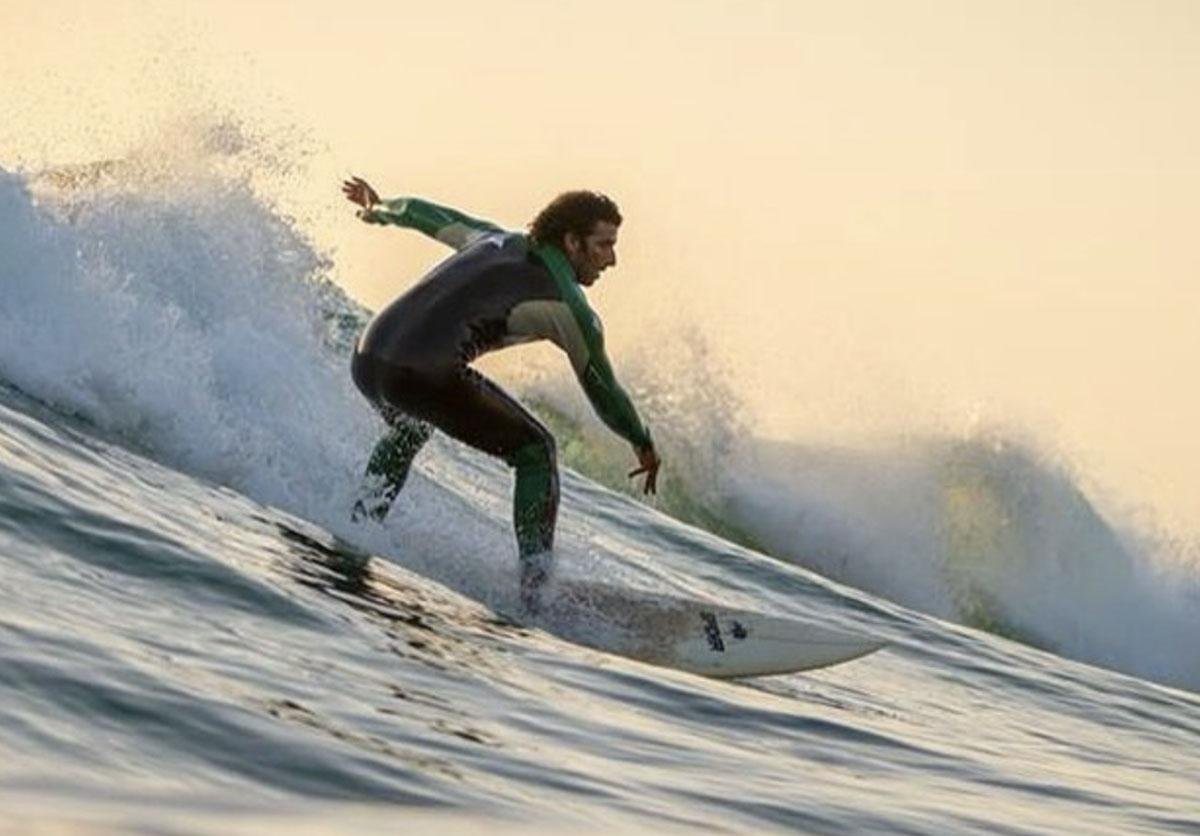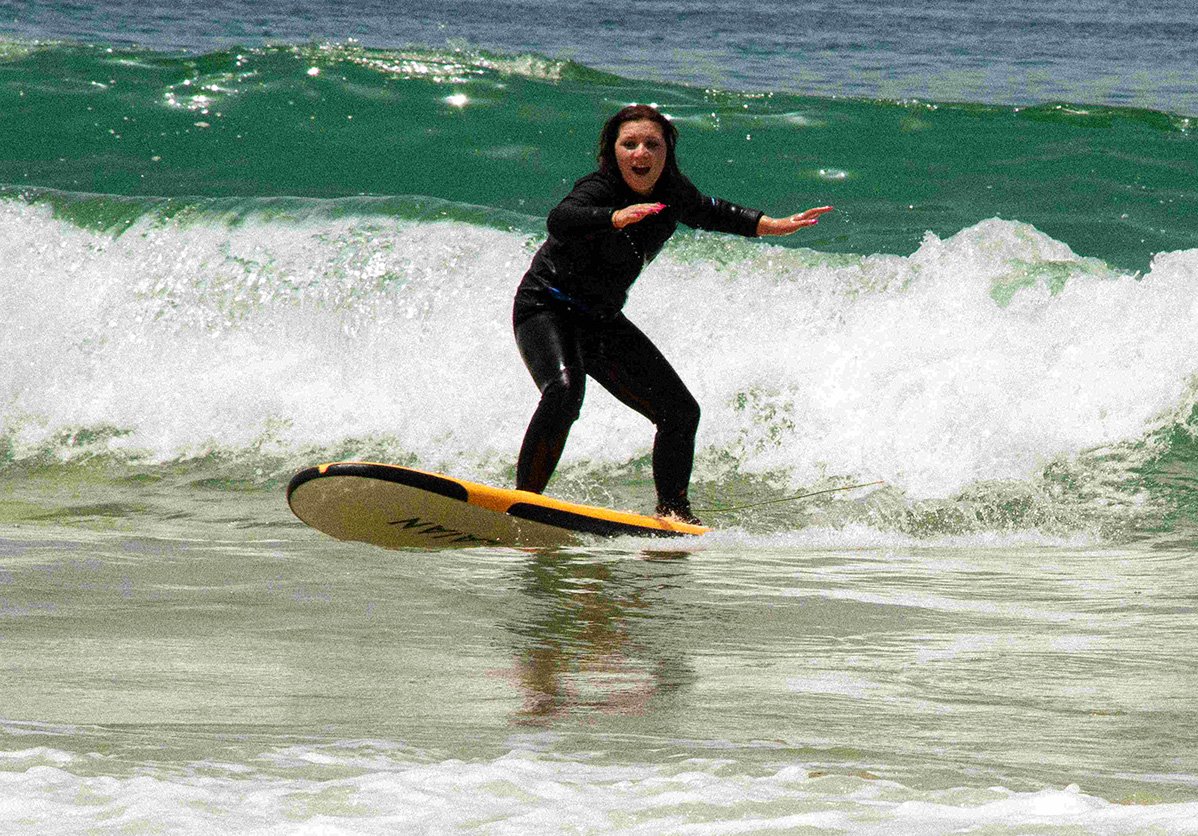
Your first surf camp in Morocco should feel exciting, but the unknowns can pile up quickly. Will everyone else be better than you? Do you need your own wetsuit? What happens if the waves are too big? And can you really learn to surf in one week?
The honest answer is that a coached week can give you a strong start, but nobody can promise the same result to every beginner. Surfing depends on the ocean, your water confidence, your energy and how quickly each skill settles in. One guest may stand on the first morning; another may need several sessions before the movement makes sense. Both can have a valuable week.
This guide explains how a beginner surf camp around Tamraght and Taghazout actually works—from arrival and equipment fitting to daily spot selection, lessons, recovery and realistic progress.
Do you need any experience before a surf camp?
No surfing experience is necessary for a beginner camp. You do not need to arrive knowing surf vocabulary, how to wax a board or which foot belongs forward. That is what instruction is for.
You should, however, tell the camp honestly about your swimming ability, previous injuries and comfort in moving water. Surfing is not a swimming lesson. If you are uneasy in the sea, say so before the first session so the coach can make an appropriate plan.
Basic fitness helps, but you do not need to train like an athlete. Paddling, repeated pop-ups and walking through white water can tire unfamiliar muscles. A few weeks of regular swimming, shoulder mobility and controlled bodyweight squats or pop-ups may make the first days more comfortable. They do not replace ocean instruction.
What happens when you arrive?
A good first evening is mostly practical. You meet the team and other guests, settle into your room, confirm the week's rhythm and share any information the coaches need. This is the time to mention a shoulder problem, a strong fear of deep water or the fact that your previous “lesson” was ten minutes on a rental board.
At Nomad, Agadir Airport transfers are included in the weekly packages. That removes the first transport decision and brings you directly to the house in Tamraght. Check the current inclusions and room options on the surf package page before booking because package details can change.
You will also need correctly sized equipment. Beginners usually learn on a large, stable soft-top rather than a short performance board. The right board gives you enough flotation to paddle and catch broken waves while you practise control. A wetsuit should fit closely without restricting your breathing or shoulder movement.
How the first surf lesson works
The first lesson normally begins on the beach, not with a paddle toward the biggest wave. Expect a short introduction to the board and leash, a warm-up, a safety briefing and a demonstration of the basic prone position, paddling movement and pop-up.
The International Surfing Association treats safety, risk management, beginner equipment, coaching methods and skill development as distinct parts of learn-to-surf instruction. That is a useful reminder that a lesson is more than helping someone stand for a photo. It should also teach you how to handle the board and make safer decisions. You can review the ISA coaching and instructing framework.
In the water, complete beginners usually start with broken waves in a controlled area. The early goals are simple but important:
- carry and position the board without hitting other people;
- lie in the correct place so the board does not nose-dive or stall;
- catch a broken wave with assistance, then with less help;
- move from lying to standing with a repeatable technique;
- look ahead, keep a stable stance and finish the ride under control;
- fall away from the board and protect your head when resurfacing.
Standing up is memorable, but it is only one part of the lesson. Catching waves, controlling the board and understanding where to be are the foundations that let you keep learning after the camp.
The surf spot can change every day
A surf camp should not promise one beach for the whole week. Swell, wind, tide, sandbanks and crowd levels change. A spot that is friendly on Tuesday may be the wrong classroom on Wednesday.
Tamraght is useful as a base because this coast offers beaches, reefs and points with different exposure. Complete beginners are not taken to a famous advanced point just because it is nearby. Coaches look for manageable broken waves, enough teaching space and an entry suited to the group.
Nomad's Taghazout-area surf spot guide shows how local breaks differ by type and ability. Treat those labels as orientation, not a guarantee. The final decision belongs to the conditions visible that morning and the coach responsible for the group.
What a beginner surf week may look like
Your week is not a seven-step exam. Conditions and energy rarely follow a perfect timetable. Still, the learning often moves through three broad phases.
First sessions: safety, balance and broken waves
You learn to manage the board, catch white water and repeat a basic pop-up. Some attempts work; many do not. Early success is less important than understanding why the board turns, stalls or nose-dives.
Middle of the week: repetition and independence
The coach may reduce the push and ask you to choose the moment to paddle. You work on looking where you want to go, keeping your stance stable and correcting one recurring mistake. This can be the most tiring part of the week, so sleep, food and recovery matter.
Later sessions: consolidation or a new challenge
If the conditions and your control are ready, you may practise angling along a wave or catching a small unbroken wave. If not, the right goal may be catching broken waves consistently without assistance. Neither outcome makes the week a failure.
Do not measure progress only by the best wave you rode. Ask whether you can now position yourself more accurately, paddle with purpose, control the board around others and explain when a wave is unsuitable. For a deeper look at levels, read how long it takes to become an intermediate surfer.
What is included at a Morocco surf camp?
Inclusions vary between camps, so read the package rather than relying on the phrase “all-inclusive.” At the time of writing, Nomad's seven-night packages include accommodation, Agadir Airport transfers, six surf days, boards and wetsuits, plus breakfast and dinner on six days. The main Nomad package also includes activities such as yoga, sandboarding, a market visit and a Paradise Valley trip.
Lunch is not included, which leaves guests free to eat near the day's surf location. Flights, travel insurance and personal spending are also separate. If you have dietary needs, an unusually small or large wetsuit size, or a flight arriving far outside normal hours, ask before paying the deposit.
The practical value of a camp is not just the equipment. Transport and daily spot selection save a beginner from renting an unsuitable board and guessing where the ocean is safest. Shared meals also make the week social, particularly if you are travelling alone. If that is you, ask about the room setup and group format before booking.
What should you pack?
If your package includes a board and wetsuit, you can keep the surf-specific packing simple. Bring:
- two swimsuits or pairs of boardshorts so one can dry;
- high-SPF water-resistant sunscreen and lip protection;
- a reusable water bottle;
- a light layer for early starts and evenings;
- secure sandals or trainers for uneven access paths;
- any essential medication and basic personal first aid;
- travel insurance that explicitly covers recreational surfing;
- a small bag for the van and beach.
Winter visitors should pack warmer layers for after the water. If you prefer your own wetsuit, check our month-by-month Morocco wetsuit guide. You can find a longer non-surf packing checklist in the Morocco surf trip packing guide.
How to stay safe during the week
Listen to the briefing even if the water looks gentle. Conditions can change across the beach, and a coach may point out a current, rock or exit route that is not obvious from shore.
The RNLI's general surfing guidance recommends checking weather and tides, knowing your limits, understanding rip currents, wearing a leash and learning basic priority rules. It also advises surfers to stay with their board if they get into difficulty because the board provides flotation and makes them easier to see. Read the full RNLI surfing safety checklist.
During coached sessions:
- stay in the teaching area the coach identifies;
- keep space between yourself and other boards;
- do not wrap the leash around your hand;
- never dive head-first into shallow or unfamiliar water;
- tell the coach immediately if you feel cold, exhausted or frightened;
- stop before fatigue removes your ability to control the board.
Can you learn to surf in one week?
You can learn a great deal in one week, but “learn to surf” needs a realistic definition. Many beginners can improve their pop-up, catch broken waves and gain enough confidence to understand the next steps. Some catch a small unbroken wave. Others spend the week becoming comfortable in moving water.
No responsible camp should guarantee that every guest reaches a green wave or becomes intermediate by a certain day. Conditions change, and people learn at different speeds. A better promise is structured coaching, suitable equipment, thoughtful spot selection and feedback that matches your current ability.
Your progress will also fluctuate. A good third day can be followed by a messy fourth day when your shoulders are tired or the waves change. That is normal. The goal is a safer, more repeatable foundation—not one lucky ride.
Frequently asked questions
Will I be the only complete beginner?
Usually not. Surf camps regularly host first-time surfers. Tell the team your true experience before arrival so you can be grouped appropriately. If group levels vary, coaches should adapt the session rather than asking a beginner to follow an advanced plan.
Do I need to bring a surfboard or wetsuit?
No. Boards and wetsuits are included in Nomad's weekly packages. Bringing your own equipment is a personal choice for experienced surfers with a specific preference, not a requirement for a first camp.
What if the waves are too big?
The team should choose a more protected spot or change the session plan. Morocco's winter swell can be powerful at exposed point breaks while a sheltered beach offers more manageable conditions. There is no guarantee that every day will suit every level, so flexibility is essential.
Is a surf camp suitable for solo travellers?
Yes. Lessons, transport and shared meals create natural opportunities to meet the group. Ask about room types, current guest mix and whether private rooms are available if that matters to you.
What happens if I miss a surf day?
Policies differ. Ask the camp before booking how illness, unsuitable conditions or a guest choosing to rest are handled. Travel insurance may cover some interruptions, but the exact policy matters.
Book your first surf week with realistic expectations
A good first surf camp removes unnecessary guesswork while teaching you to make better decisions in the water. You should leave with safer habits, clearer technique and an honest idea of what to practise next—even if your final session does not look like a surf film.
Tell us your dates, swimming confidence, previous board-sport experience and any injuries. Then compare Nomad's weekly packages or contact the team to plan your first surf camp in Tamraght.