Arriving in Taghazout During Eid al-Adha: What's Open, What's Not, and Why It's Actually Kind of Special
You step off the bus in Tamraght, salty from the Agadir airport ride, and the village looks like someone hit pause. No cafés open. No fruit guy. A man walks past carrying half a sheep over his shoulder like it's a yoga mat.
Welcome to Eid al-Adha. Yes, half the town is shut. No, your surf trip isn't ruined — you've stumbled into one of the strangest, most generous weeks of the Moroccan calendar, and if you don't panic, it can end up being the best part of your trip.
What is Eid al-Adha in Morocco, really?
Eid al-Adha (also called Eid el-Kebir, "the big Eid") is the most important religious holiday in Morocco. It commemorates the prophet Ibrahim's willingness to sacrifice his son, and every family that can afford it sacrifices a sheep at home on the morning of the first day.
Think of it as a cross between Christmas and Thanksgiving — but with grilling. For three to four days the whole country goes into family mode. People travel back to their villages, shops close, the rhythm slows, and the air around Tamraght and Taghazout fills with the smell of charcoal and lamb fat.
The dates shift every year because Eid follows the lunar calendar, moving about eleven days earlier each time. Check before you book. If your flight lands on day one, you're walking into a ghost town — and that's not a metaphor.
Is Morocco closed during Eid? Mostly, yes
Let's be honest: day one of Eid al-Adha is the closest thing this country has to a complete shutdown. Not Friday-closed. Not Ramadan-afternoon-closed. Properly closed.
Here's what actually shuts in Tamraght and Taghazout:
- The souk in Tamraght — gone. The fruit and veg stalls, the bread guy, the little hanout where you buy eggs. All shuttered for at least 48 hours, sometimes longer.
- Most cafés on the main road — including the ones that never close. Even the chain-smoking grandads at Café Mouja take the day off.
- Half the surf schools and board rental shops — the Moroccan-run ones especially. European-owned camps often stay partially open with skeleton staff.
- Hammams, barbers, pharmacies — closed on day one, partially reopening from day two.
- Grands taxis and the local bus — sparse to nonexistent on day one. Drivers are home with their families, eating offal kebabs and judging their cousins.
By day two and three things blink back to life. By day four most of the village is functional again, just slower and a bit greasier.
What stays open during Eid al-Adha in Taghazout
Plenty. Don't book a flight out in a panic.
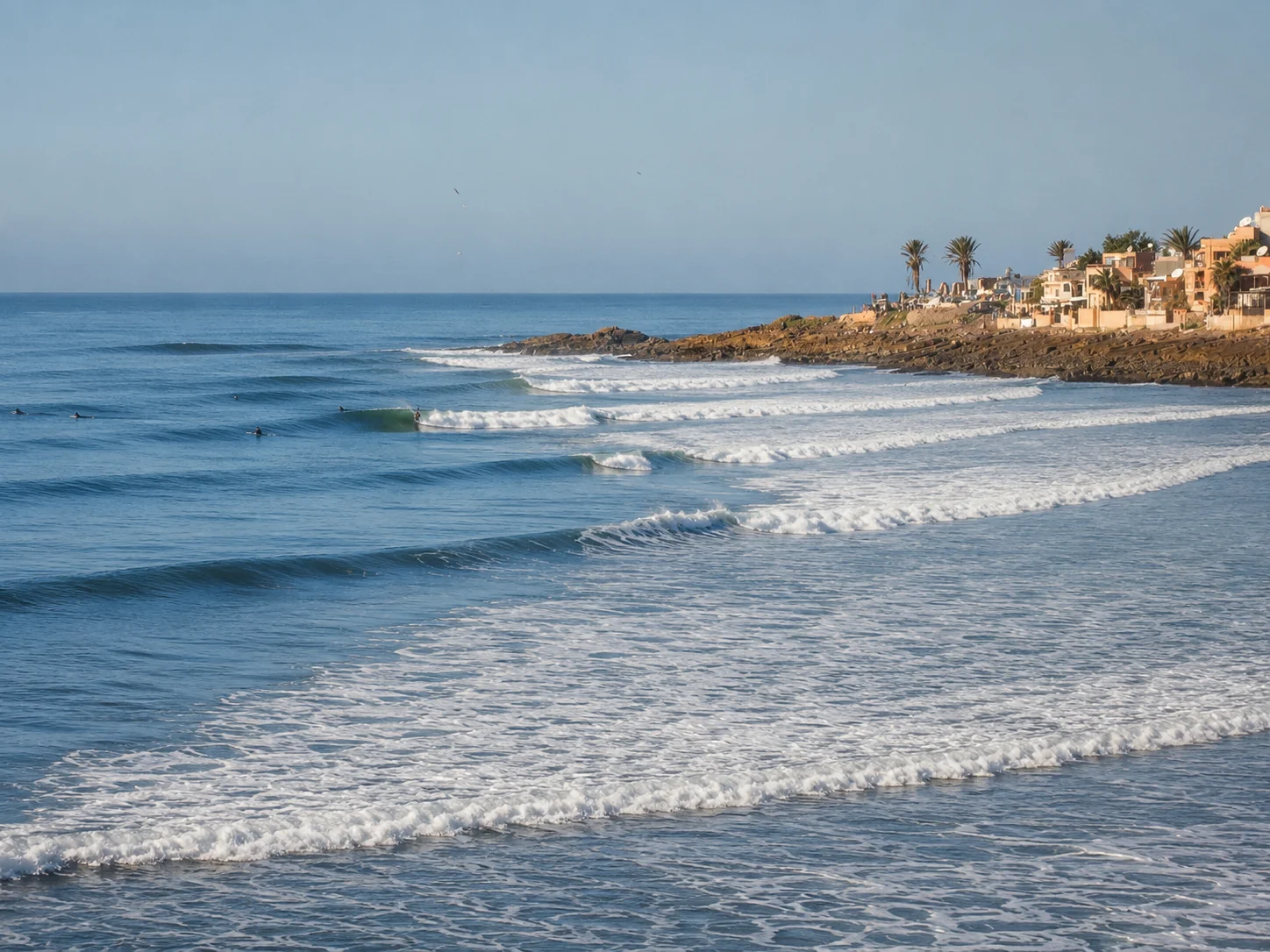
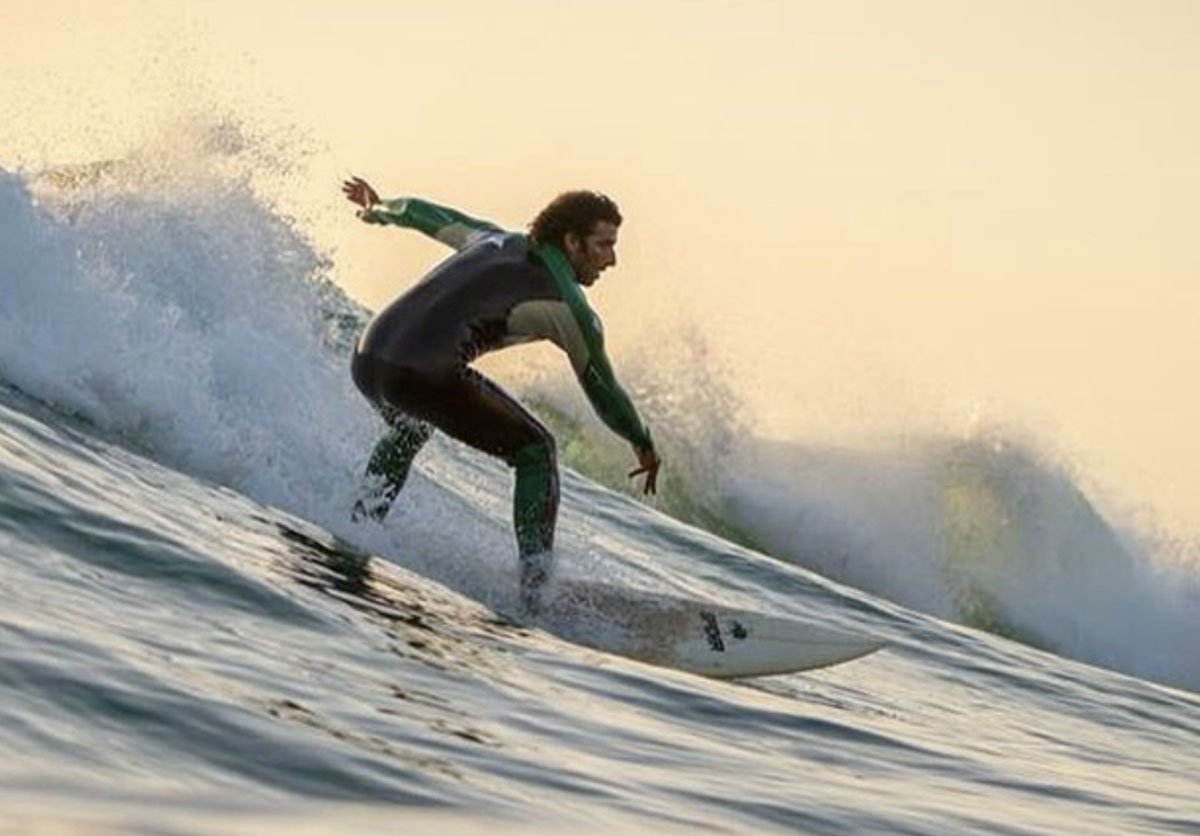
The ocean. Obviously. The waves don't take religious holidays. Anchor Point, Killer, Hash Point, Banana, Devil's Rock — all working as normal, and arguably better, because half the usual crowd is at their grandmother's house in the Souss valley. If Eid lands in autumn or winter, you might get Anchors with twenty people in the water instead of seventy. That alone is worth the inconvenience.
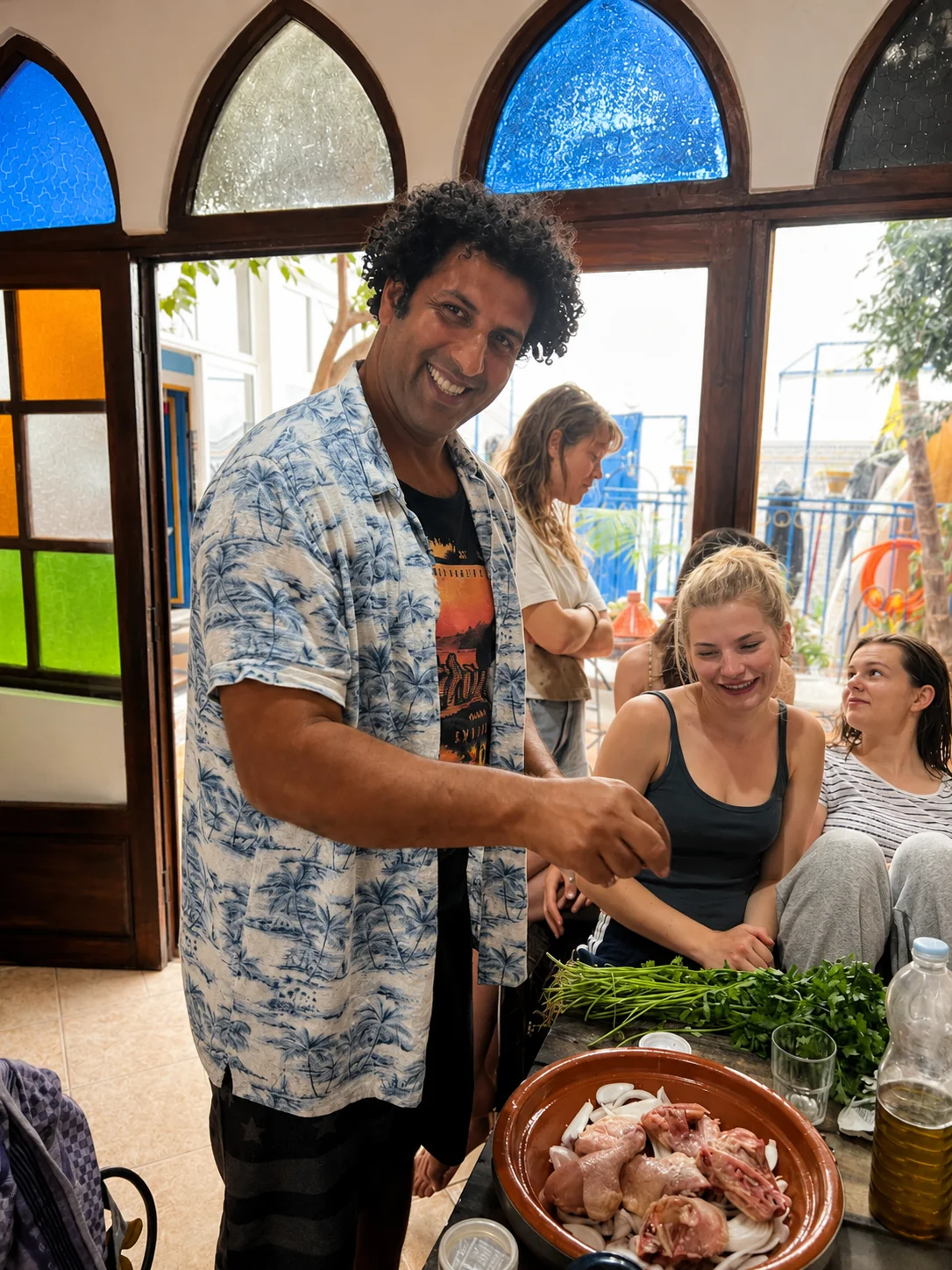
Your surf camp's kitchen. If you booked a place that includes meals — and most camps here do — the kitchen runs as normal. Staff who work over Eid usually get bonus pay and double rations. You'll eat. You'll eat a lot. Probably tagine, probably with raisins, and probably more lamb than you've seen in your entire life.
A few tourist-facing spots in Taghazout. Munga Guesthouse café, World of Waves, a couple of the smoothie places on the corniche, the surf shops aimed at foreigners. Not all of them, not consistently, but enough to get a coffee and check Instagram.
The big supermarkets in Agadir. Marjane and Carrefour run reduced hours from day two. Worth knowing if you're really stuck.
The sheep situation — let's just talk about it
You will see sheep. Tied up on rooftops in the weeks before, walked down the road on the morning of, and on day one you'll see — or at least smell — the aftermath.
Every family that can afford it slaughters a ram at home. It's done quickly, usually by the father or a local butcher, and it's a deeply religious act, not a spectacle. Heads get blowtorched on the street to remove the wool. Skins get hung over walls. The smell of grilled liver and heart — the first parts traditionally eaten — drifts through every neighborhood by mid-morning.
If you're vegetarian, vegan, squeamish, or just culturally jet-lagged, this can be a lot. Honest advice: don't walk through residential streets on day one. Stick to the beach road, the surf spots, and the corniche. By day two it's mostly cleaned up, though you'll see skins drying on rooftops for the next week.
This is not the moment to clutch your pearls about meat ethics. Moroccans raise these animals carefully, often by hand, and waste almost nothing. The whole point of Eid is sharing — a third of the meat goes to family, a third to friends, a third to people who can't afford their own sheep.
What to do in Tamraght during Eid (when nothing's open)
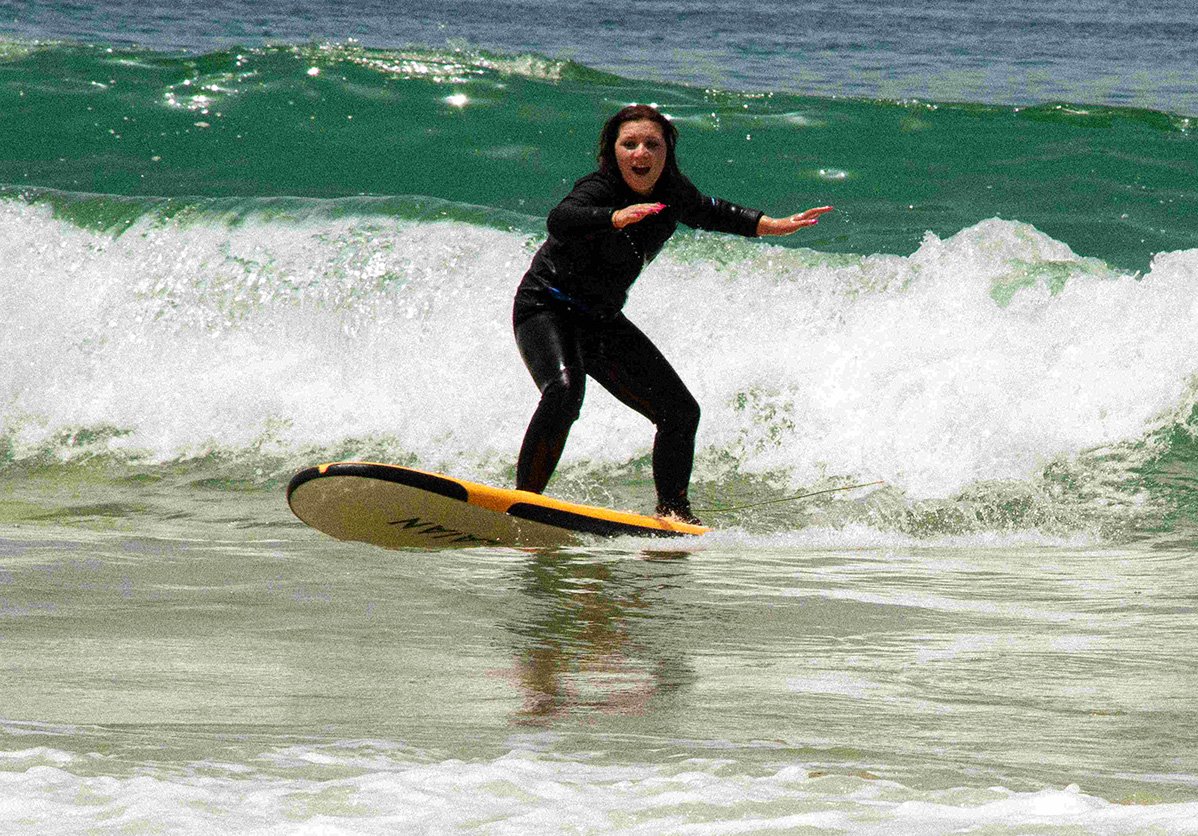
Surf. Surf again. Then surf a third time, because there's no queue at Croco for breakfast and your usual yoga class is canceled.
Beyond that:
- Walk the coast to Aourir. The path from Tamraght south past Banana Beach to Devil's Rock is empty and gorgeous. You'll pass exactly zero tour buses.
- Go up to Paradise Valley. Taxis are scarce but the road is open, and the upper pools are blissfully empty when the local day-trippers are at home eating. Hire a car or split a private driver from your camp.
- Stock up on day zero. The day before Eid, the Tamraght souk is the busiest you'll ever see it. Buy water, bread, fruit, snacks — anything you'd want for 48 hours.
- Ask your camp staff what they're doing. This is the move. More on that below.
Getting invited to a family lunch is the best thing that can happen to you
If a Moroccan invites you to their family's Eid lunch — your surf coach, your camp's cook, the guy who rents you a board — say yes. Immediately. Don't be polite-British about it. Don't worry you're imposing. Hospitality during Eid is a point of pride, and turning down an invitation is genuinely more awkward than accepting one.
What to expect: you'll be the guest of honor in someone's family home, probably in Aourir or one of the inland villages. You'll sit on low cushions around a shared table, served roughly in this order — mint tea, msemen (square pancakes) with honey, then mechoui or boulfaf (liver skewers wrapped in caul fat — trust me), then tagine, then more tea, then fruit, then more tea.
Bring something. A box of pastries from a patisserie in Agadir is perfect. Dress modestly — covered shoulders and knees is plenty. Eat with your right hand from the shared plate, take small portions, and accept seconds at least once. You don't need to speak Darija; smiles and "shukran bezzaf" (thanks a lot) carry you a long way.
This is the part of an Eid surf trip people talk about for years. The waves you'll remember; the lunch you'll never shut up about.
Should you avoid arriving during Eid al-Adha?
Honestly? Depends entirely on what you want.
If your idea of a surf trip is rolling between cafés, sampling fifteen different breakfasts, browsing the souk, doing yoga at three different studios, and never thinking about logistics — then yes, Eid week is a frustrating time to land. The first 48 hours will feel like the village has abandoned you.
If you came here to surf, eat at your camp, swim, read, and have one weird unforgettable cultural week — Eid is a gift. Smaller crowds in the lineup, slower mornings, a chance to see Morocco off-script. The country isn't performing for you. It's just being itself.
My take: don't actively plan around it, but don't panic-rebook either. Bring snacks for the first 24 hours, tell your camp you're coming, and let the rest unfold.
FAQ
How long does Eid al-Adha last in Morocco?
Officially one day, but in practice it shuts the country down for two to four. Day one is total. By day three most shops are open again. By day five you'd barely know it happened, except for the skins on the rooftops and everyone looking slightly tired.
Will my surf camp still run lessons during Eid?
Most foreign-owned camps run a reduced schedule — usually one lesson a day instead of two, with European or expat coaches working while Moroccan staff are with family. Ask before you book if it matters. The waves themselves are completely unaffected and often less crowded.
Can I get from Agadir airport to Taghazout during Eid?
Yes, but arrange it in advance. Book a private transfer through your camp or a known driver — don't gamble on grands taxis at the airport, especially on day one. The drive itself is normal; it's the availability that gets weird.
Is it disrespectful to surf or be on the beach during Eid?
Not at all. Eid is a family holiday, not a quiet religious observance like the daytime hours of Ramadan. Moroccans go to the beach during Eid too, especially on days two and three. Just be a bit more covered up walking through the village, and don't film people's homes or sacrifices.
What should I bring if I'm landing on day one of Eid?
Water, snacks, any medication you need, and cash from the airport ATM. Your camp will feed you, but a stash of biscuits and a couple of liters of water for that first dazed afternoon makes a real difference. Welcome to Morocco. Have a piece of msemen.