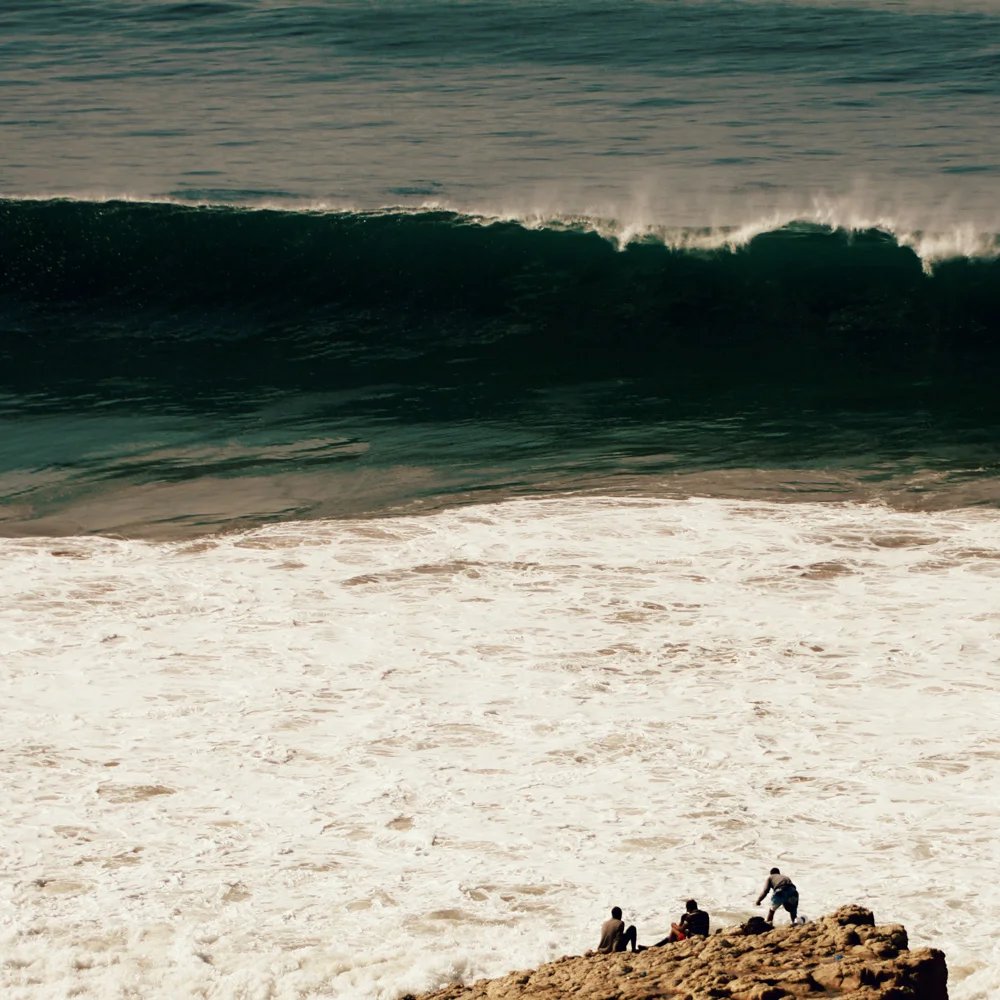
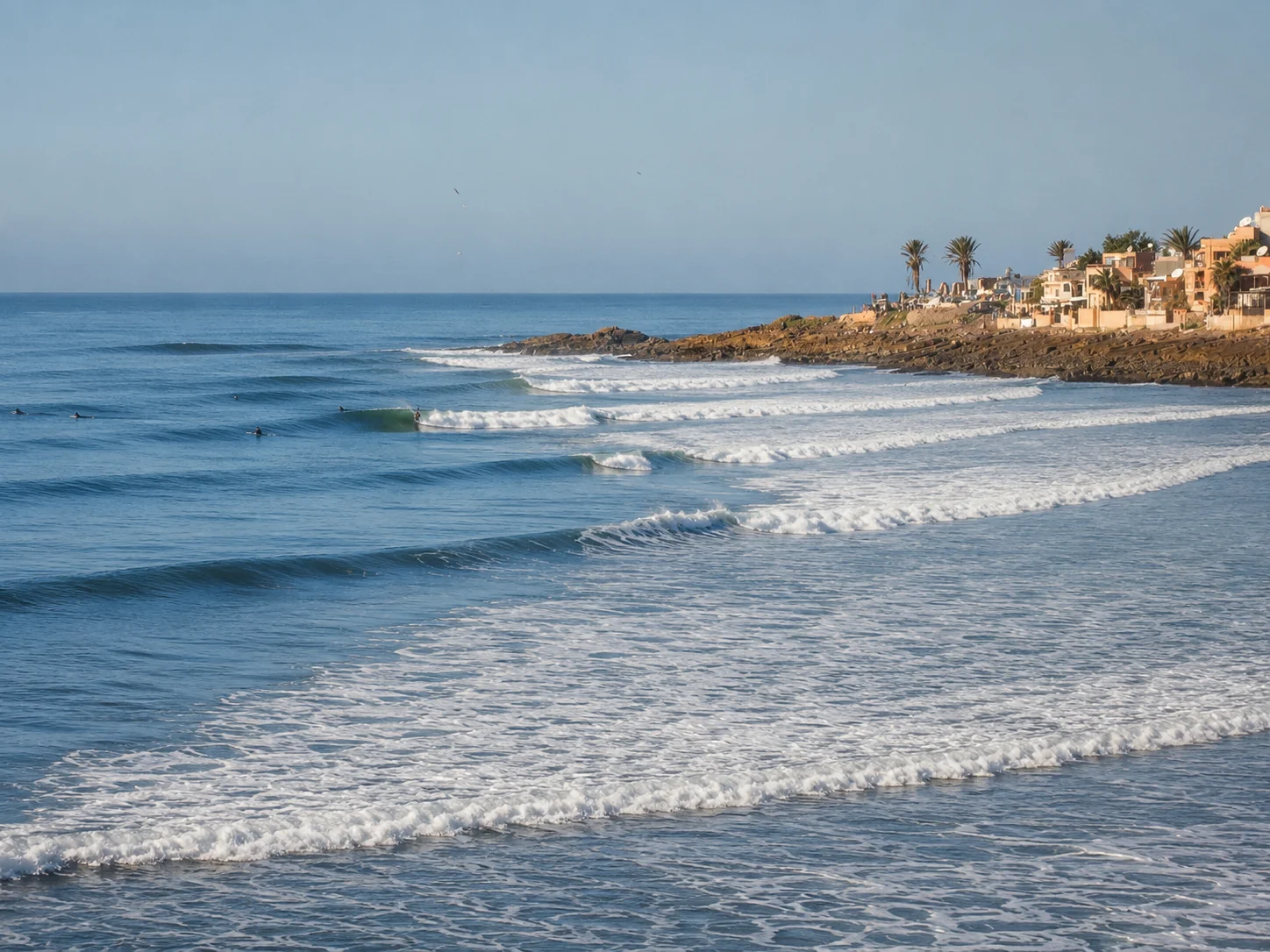
You land in Agadir with seven days, a board bag and a phone full of flawless Anchor Point clips. Then the Atlantic goes quiet for three days. That’s the honest risk of surfing Morocco in November.
November isn’t too early. It’s part of Morocco’s main surf season, with a better chance of North Atlantic swell than September or early October. Beginners can usually find workable beach breaks, while experienced surfers have a credible shot at the Taghazout points.
But “credible shot” isn’t “guaranteed Anchor Point”. Over one week, you’re likely to have options; you’re not guaranteed a famous point working at the right size, wind, tide and crowd level. November suits flexible surfers. It’s a bad choice for anyone whose holiday only counts if one particular wave fires.
Is November actually surf season?
Yes. Morocco’s tourism office recommends October to April for experienced surfers and says beginners can surf throughout the year. Independent surf guidance also places November inside the stronger late-autumn and winter window. You can read the Moroccan tourism office’s surf guide and this month-by-month Morocco surf-season guide.
Those are seasonal patterns, not forecasts for your specific Tuesday morning. A November week might include a clean groundswell, two smaller fun days and a windy mess. It could also stay modest or briefly become too large for the obvious spots. Anyone confidently predicting your wave count months ahead is selling certainty the Atlantic hasn’t agreed to.
Our verdict: November is a smart bet if you’re happy to move between breaks and surf what’s available. It’s a poor bet if you’ve mentally booked seven mornings at Anchor Point.
Why “two metres” tells you almost nothing
A forecast’s headline wave height doesn’t tell you whether a particular point will work. You need to look at the whole picture:
- Direction: A swell needs a useful angle to reach and wrap into each point. One headland may be lively while a more sheltered break barely notices it.
- Period: Long-period groundswell carries more energy than short-period windswell. The same stated height can feel dramatically more powerful.
- Wind: Light or land-based wind can clean up the faces; stronger onshore wind can ruin them. Early starts often help, but November mornings aren’t magically offshore every day.
- Tide: Tide changes the take-off, speed, exposed rocks and access. The useful window depends on both the break and the swell.
- Crowds: A technically surfable point may still be a rubbish choice. An intermediate can catch more waves at an unfashionable beach break than while orbiting a packed main peak.
The best November session may be ten minutes away from the break everybody’s filming. Local flexibility matters more than loyalty to a famous name.
What November means for your ability level
Beginners
November can be very good for beginners when the day’s lesson is moved to a suitably sheltered beach. Around Tamraght, sandy options such as Crocro or parts of Banana Beach may offer manageable whitewater or green waves when conditions cooperate.
“Sandy” doesn’t mean automatically safe. Currents, shorebreak, shifting banks and other surfers still matter. During a larger swell, the sensible choice may be a protected corner, a different tide or no lesson during that window. An instructor changing the plan is doing their job.
Intermediates
Intermediates probably have the most to gain from November—and the greatest talent for talking themselves into waves above their pay grade. Smaller days at Panorama, Hash Point, Banana Point or a suitable beach break can be brilliant. Add long-period swell and those same areas may become fast, crowded or awkward.
If you can catch unbroken waves but rarely surf points, don’t assume the word “intermediate” grants automatic access to every right-hander. Paddle fitness, positioning, board control in crowds and rocky entries all count. Ten waves somewhere quieter beat two hours watching the pack.
Advanced surfers
For advanced surfers, November offers a real possibility of Anchor Point, Killer Point, La Source, Mysteries and other reefs or points coming into play.
The important word is possibility. Anchor Point could be flat, badly angled, wind-affected, overcrowded or bigger than you want. Surfers who understand forecasts, have transport and can choose between more than one board have better options. They still don’t control the Atlantic.
Early November or late November?
Later November generally sits deeper in the North Atlantic swell season, so an experienced surfer travelling mainly for the points may prefer the second half of the month. That’s a slightly better seasonal bet, not a reason to treat 20 November as some mystical switch-on date.
A good swell on 4 November beats a flat spell on 26 November. Beginners and developing intermediates may not benefit from waiting for more powerful surf anyway. Pick dates that work for your trip, then keep your expectations loose.
What wetsuit and board should you bring?
For most people, a 3/2 mm full suit is the sensible November choice around Taghazout. Surfers who run warm may occasionally find it excessive; people who get cold will appreciate it during long mornings or windy afternoons. Don’t plan a boardshort-only week because somebody posted a sunny photo.
Reef boots aren’t usually necessary for warmth. Some experienced surfers use them for rocky entries, but they don’t make a difficult entry safe.
- Beginners: Use a large foam board suited to your size. This isn’t the week to downsize because a hardboard looks better under your arm.
- Intermediates: A familiar daily driver with useful volume will cover more sessions than a thin performance shortboard. A mid-length can make sense on softer days.
- Advanced surfers: A normal shortboard covers plenty. Add a step-up only when the forecast and your ability justify the luggage hassle.
If you’re travelling independently, pack spare fins, a reliable leash and basic repair material. Check that your insurance explicitly covers surfing; ordinary travel insurance shouldn’t be assumed to cover lessons, reef breaks, rescue costs or board damage.
How not to waste a one-week trip
The classic mistake is checking one forecast icon, driving to Anchor Point and waiting because leaving feels like admitting defeat. Meanwhile, a smaller beach break is clean or another stretch of coast suits the swell direction better.
- Read height, direction, period, wind and tide together.
- Check more than one break before committing.
- Choose for the least experienced surfer in your group.
- Keep a smaller-wave board option available.
- Accept that the best call may change during the day.
Independent spot hunting works if you can assess unfamiliar breaks, have suitable transport and are willing to change plans. Coaching is more useful when you need feedback as well as transport. Guiding suits capable surfers who can handle themselves but don’t know which local break fits that morning’s conditions.
If you’d rather have help choosing a sensible spot each day, you can compare Nomad’s surf-stay packages. It’s a practical way to add coaching, guiding or transport where needed—not a promise of Anchor Point, empty lineups or perfect waves.
November surf FAQ
Will I definitely surf Anchor Point?
No. November improves the chance of suitable swell, but Anchor Point still needs the right direction, period, wind and tide. Your dates may not line up, and good conditions can be crowded.
Can beginners surf in November?
Usually, yes. The suitable beach and lesson time depend on that day’s conditions. Beginners shouldn’t assume every famous break has a safe beginner section.
Is November better than December or January?
Not for everyone. December and January generally bring stronger point-break potential, but also more demanding surf. November can be a better compromise for mixed-ability groups and intermediates who value variety over maximum size.
Do I need a car?
Not when your lessons, guiding or surf transport include getting to the break. Independent surfers benefit from transport because the useful spot may be outside walking distance. Remember that a rental also means board storage, parking and driving unfamiliar roads.
Should I book if surfing is the only reason for my trip?
Yes, if you can enjoy points when they work, beach breaks when they don’t and an occasional rest day when conditions are wrong. If only overhead Anchor Point counts as success, choose deeper winter—and accept that even then, nobody guarantees the forecast.