Marrakech Is 42°C, the Coast Is 24°C: Why You Should Surf Taghazout in a Heatwave
Every June, our inbox fills up with the same panicked email: "I booked Morocco in July, am I going to die?" Short answer: not if you stay on the coast.
Yes, Marrakech in summer is genuinely brutal — 42-45°C, asphalt-melting, can't-leave-the-riad-between-noon-and-6pm brutal. But Tamraght and Taghazout, three hours west on the Atlantic, sit around 24°C with a steady onshore breeze. Two different countries pretending to share a flag.
Is Morocco too hot in July? Depends entirely on where you go
This is the thing nobody tells you when you Google Morocco in summer heat: the country is enormous, and the weather inland has nothing to do with the weather on the coast. Marrakech, Fes, Meknes, the Sahara — all furnaces from mid-June to early September. Easily 40°C+, sometimes pushing 47°C during the chergui (the hot desert wind that rolls in from the east and ruins everyone's week).
The Atlantic coast plays by different rules. The cold Canary Current runs down western Morocco and drags the air temperature with it. Add the trade winds, which kick in almost every afternoon from May through September, and you get a microclimate closer to northern Portugal than North Africa.
So when people ask is Morocco too hot in July, the honest answer is: Marrakech is, Tamraght isn't. Same country, 15-degree difference. We've worn hoodies here on August evenings while friends melted in a Marrakech riad, sending increasingly unhinged voice notes.
Taghazout vs Marrakech summer: the actual numbers
Let's get specific, because vague claims about "milder coast weather" don't help you pack.
Average daytime highs in Marrakech from June through August: 36°C, 38°C, 38°C. Record highs every summer routinely touch 45°C, and the 2026 heatwave forecasts are already pointing at another nasty one. Nights barely drop below 22°C. No sea breeze. The medina holds heat like a pizza oven.
Average daytime highs in Taghazout and Tamraght for the same months: 24°C, 26°C, 27°C. Sea temperature hovers around 19-21°C — properly refreshing without being freezing. Evenings cool to 18-19°C, which is hoodie-on-the-rooftop weather. The afternoon wind surfers grumble about (because it ruins the waves) is the same wind that keeps the village livable when the rest of the country is dying.
If you only remember one thing about Taghazout vs Marrakech summer: there's a 12-14 degree gap between them, every single day, all summer long.
Why the coast dodges the Agadir heatwave 2026 headlines
You'll see scary articles about an Agadir heatwave 2026 and assume the whole region is unbearable. But Agadir city, despite sitting on the coast, occasionally gets hit when the chergui blows in from the Atlas Mountains. When that happens — usually 4-6 days a summer — temperatures can spike to 38°C even by the beach.
Here's the local secret: Tamraght and Taghazout, 20 minutes north of Agadir, are partially shielded by the way the coastline curves. The chergui still reaches us, but weaker, and the trade winds usually push it back out within a day or two. We've seen Agadir hit 40°C while Tamraght sat at 28°C with onshore wind. One bend in the road, completely different weather.
Even on a "bad" coastal day, the ocean is 100 metres away. Pop in, cool down, come out, repeat. The Sahara doesn't offer that.
What the coast actually feels like in summer
People who haven't been here picture "Morocco in August" as a Saharan fever dream. The reality in Tamraght is closer to a quiet Portuguese fishing village that happens to serve incredible tagines.
Mornings are still and bright. You can paddle out at Devil's Rock or Crocodile Beach before 9am in a 3/2, sometimes just boardshorts and a rashguard. By 11am the wind picks up — gentle at first, building through the afternoon. By 2pm the points are blown out, which is why everyone surfs in the morning and naps after lunch like proper Moroccans.
Evening is when the coast really earns its reputation. The wind drops around 6pm, the light goes golden, the call to prayer rolls down from the village, and everyone — locals, surfers, the kids selling msemen on the corner — ends up on a rooftop somewhere. Genuinely one of the best times of year to be here, despite what the inland horror stories suggest.
The summer surf is actually beginner-perfect
This is the part most people get backwards. Winter is Morocco's "real" surf season — that's when Anchor Point, Killer Point and the rest of the big right-handers wake up. Summer swell is smaller, gentler, shorter-period. Which is exactly what you want if you're learning or rebuilding confidence.
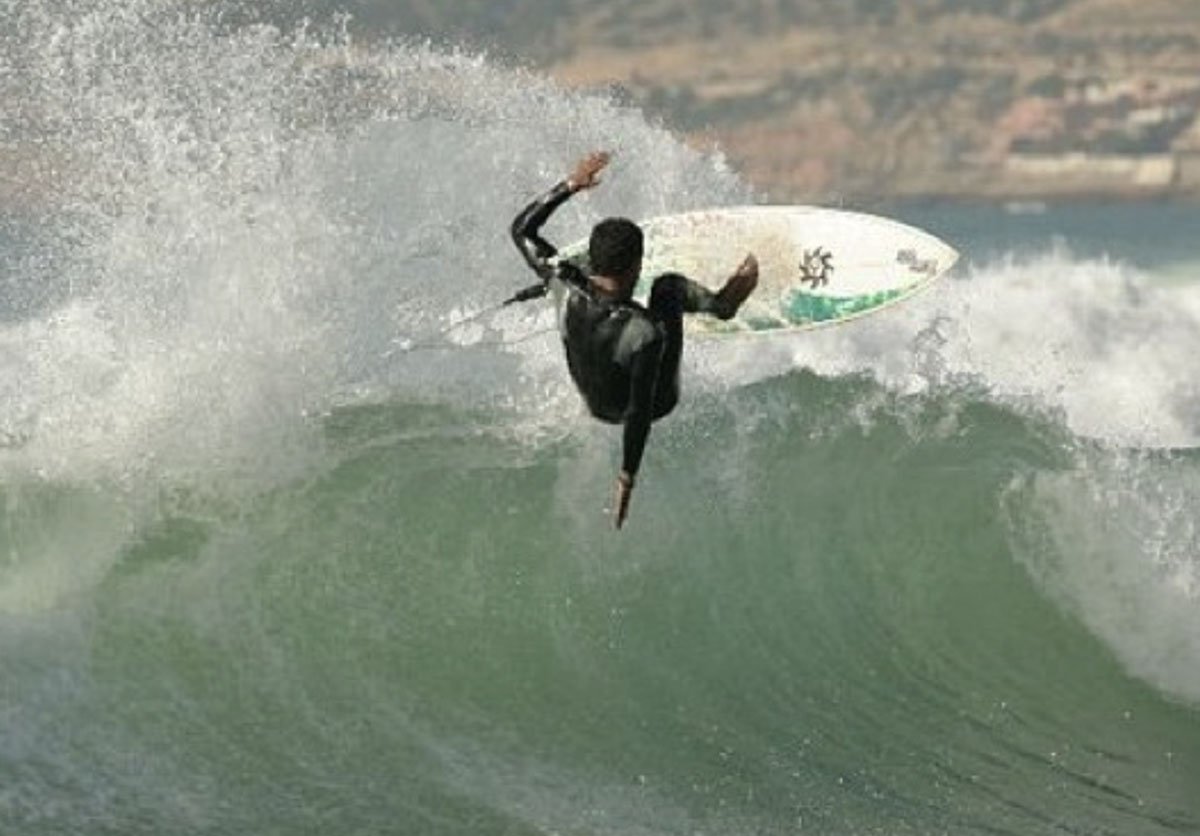
The beach breaks at Crocodile Beach, Banana Beach and Devil's Rock turn into a beginner's playground from June to August. Waist-to-chest-high, soft, predictable. You can take a lesson at 9am, surf again at 6pm, and still have energy to eat half a kilo of grilled sardines for dinner.
For intermediates, the small summer swells are perfect for finally getting comfortable on a shortboard, working on cutbacks, or trying a longboard nose-ride at Imourane. It's the season to fix your surfing, not to chase your biggest wave.
How to plan a Morocco coast trip in summer
If you've been talked out of Morocco in summer by the heat warnings, here's the playbook for doing it right.
- Fly into Agadir (AGA), not Marrakech (RAK). AGA puts you 25 minutes from Tamraght. RAK means a 3-hour transfer through hot inland country and you'll arrive miserable. easyJet, Ryanair, Transavia and TUI all run direct AGA routes from most European hubs in summer.
- Base yourself in Tamraght or Taghazout, not Agadir city. Agadir is fine, but it's a proper city — bigger, busier, hotter when the chergui hits. The villages 20 minutes north are where the surf scene actually lives.
- Pack for spring, not summer. Bring a light hoodie and long trousers for evenings. We're serious. You'll thank us at 8pm on a rooftop.
- Save inland trips for shoulder seasons. Do Marrakech, Fes and the desert in October or March. In July, even a day trip inland is suffering.
- Drink more water than you think you need. The coast feels cool because of the wind, but the sun is still North African strong. People underestimate it and end up wrecked by day three.
What about food, festivals and the Ramadan question?
Quick housekeeping: Ramadan in 2026 falls in February-March, so summer travel is totally clear of it. Restaurants, cafés and surf schools all run normal hours from June onwards.
Summer is peak season for the village calendar — moussems (local religious festivals), beach weddings that spill onto the sand, and night markets in Aourir that get genuinely lively. We've written about this in more depth in the summer festivals post, but the short version: nights here are alive, not shut down.
Food-wise, summer is sardine season. The Atlantic sardines landed in Taghazout in July are some of the best fish you'll ever eat, grilled over coals for about 40 dirhams a plate. Add a tomato salad, fresh bread, mint tea — lunch sorted for under 6 euros.
FAQ
Is Morocco in summer heat actually dangerous?
Inland, yes — heatstroke is a real risk in Marrakech and the desert in July and August, especially if you're not used to dry 40°C+ heat. On the coast, no. Tamraght and Taghazout sit in the low-to-mid 20s with constant wind, and the ocean is right there. It's safer summer weather than most of southern Europe.
Can you still surf in Morocco in July and August?
Yes, and it's the best time of year to learn. Smaller, gentler swells fill in the beach breaks at Crocodile, Banana and Devil's Rock. The big-name points like Anchor and Killer are mostly asleep, but that's a winter game anyway. For beginners and intermediates, summer surf in Taghazout is ideal.
Do I need a wetsuit in summer?
A 3/2 is plenty, and plenty of people get away with a 2mm shorty or just boardshorts and a rashguard by August. Water sits around 19-21°C — refreshing rather than cold. Bring something though; the wind picks up and a wet rashie gets chilly fast.
Should I do a day trip to Marrakech from the coast in summer?
Honestly? No. Three hours each way through hot country, and you'll arrive in 42°C wanting to leave immediately. Save Marrakech for October or March, when you can actually walk around. In summer, stay coastal.
What about solo female travelers in summer?
Tamraght and Taghazout are about as relaxed as Morocco gets — small villages with a big international surf community, lots of solo women travelers, and a genuinely safe feel day and night. Summer is no different. Standard sensible-traveler stuff applies, but you won't get the hassle some people associate with bigger Moroccan cities.