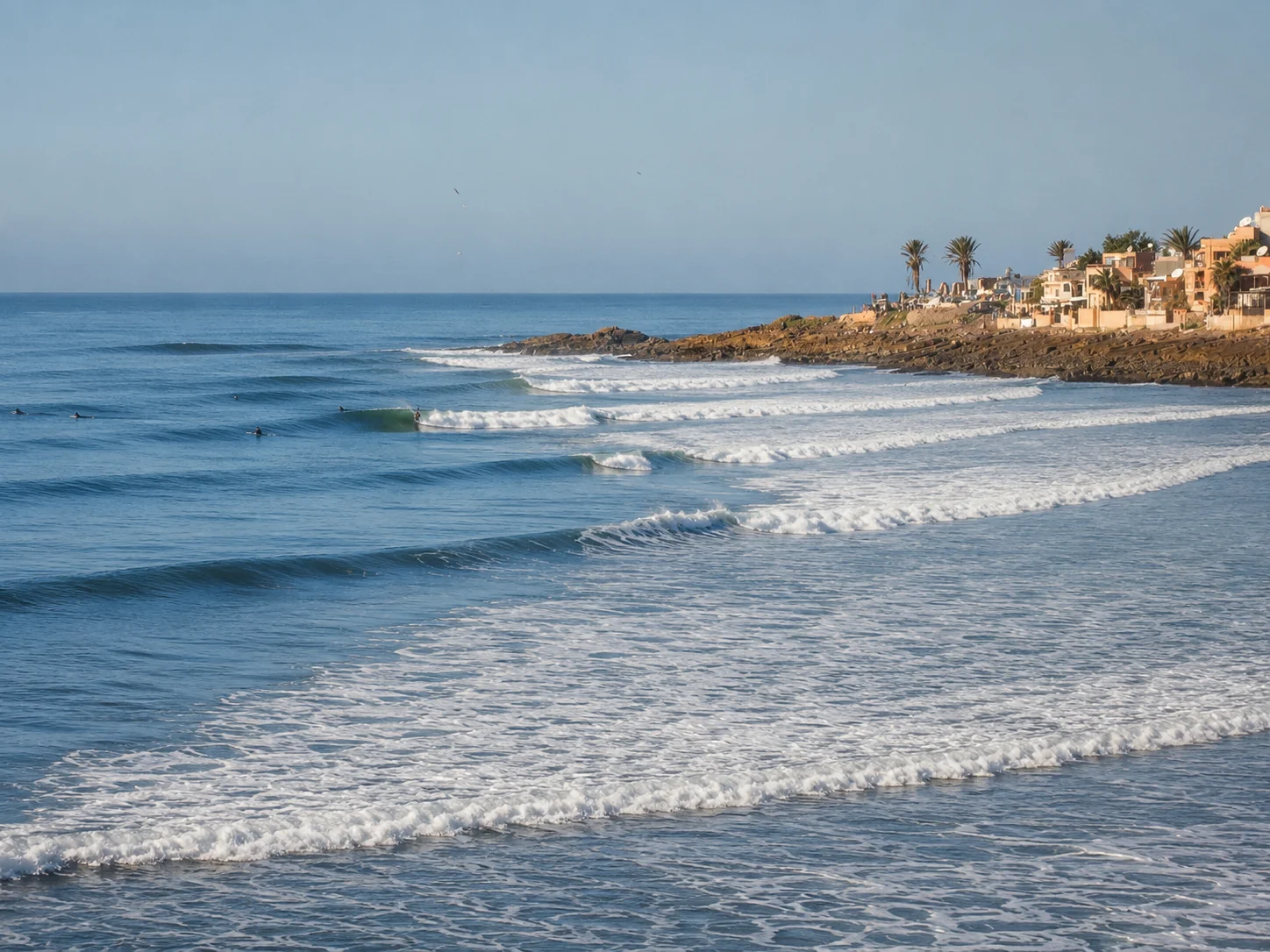
Killer Point is an intermediate to advanced wave. It is not suitable for beginners. You need strong paddling endurance for the 15-minute trek to the peak and the ability to handle vertical take-offs on a fast, heavy right-hand point break. Beginners are safer at nearby sandy spots like Crocros or Banana Point.
The reality of the paddle out
The first thing our coaches tell anyone eyeing Killer Point is to look at the distance. This isn't a beach break where you walk out waist-deep and jump on a board. To get to the main peak, you are looking at a 15-to-20-minute paddle from the beach. On a big day, the sweep is heavy. If you aren't used to paddling for 500 meters against a current, you will be exhausted before you even see a set wave.
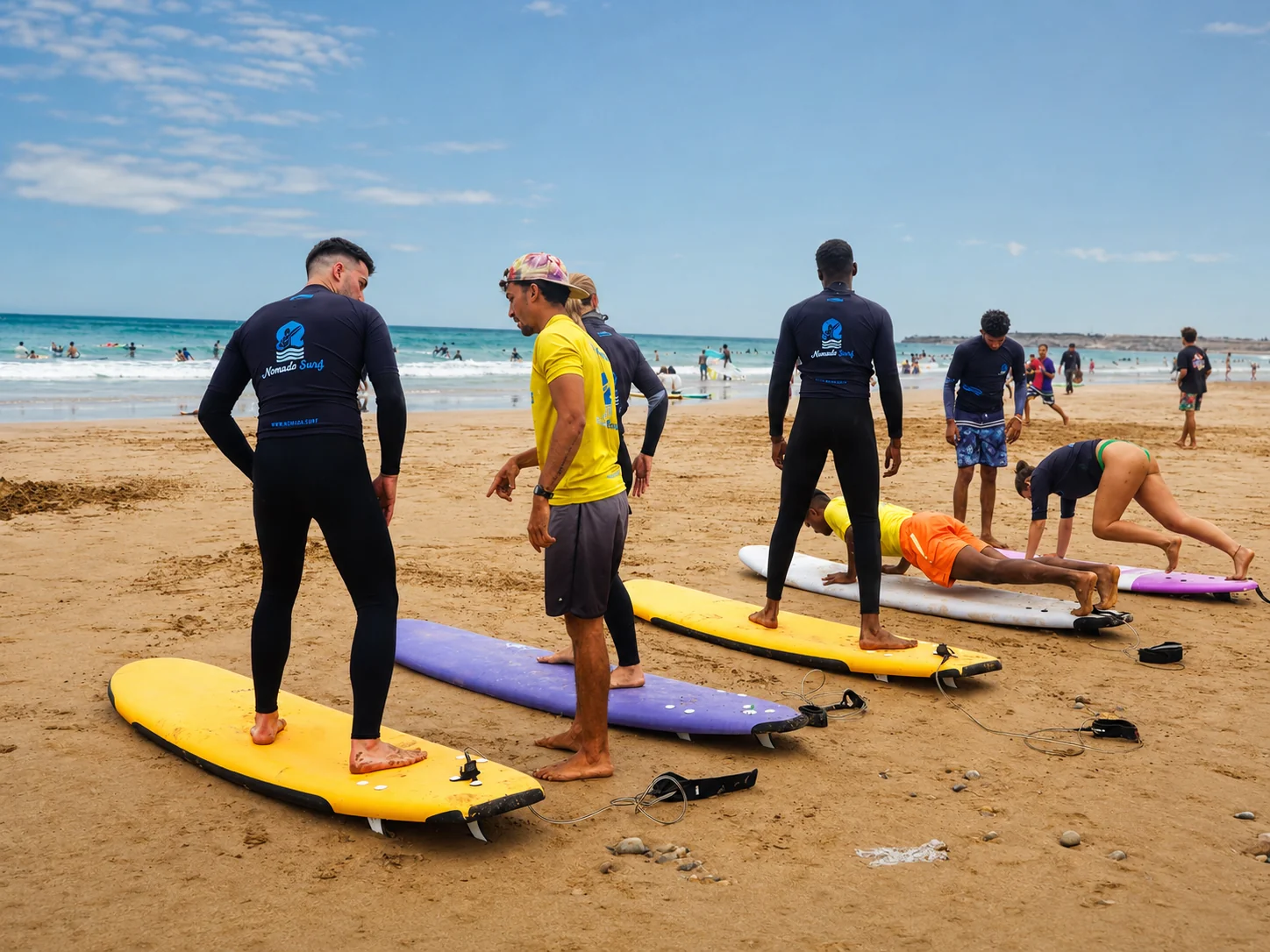
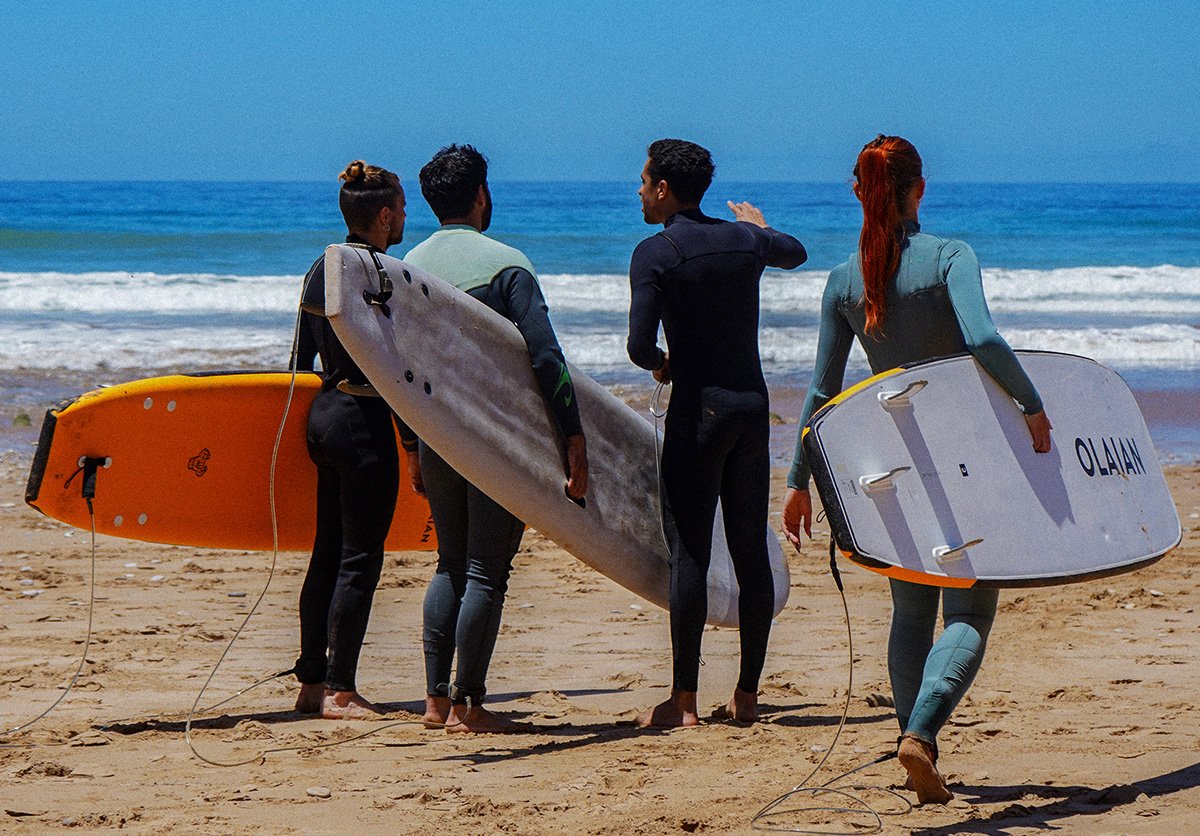
We often see people underestimate the entry. At low tide, you can walk out over the rocks, but they are sharp and covered in sea urchins. Many of us wear 2mm booties here just to save our feet. If the swell is over 1.5 meters, the water moves a lot of volume. It is easy to get pushed toward the rocks near the caves if you don't have the arm strength to stay in position.
"If you can't comfortably surf the back of Devil's Rock when it's overhead, you aren't ready for a six-foot day at Killers. The wave moves much faster than the beach breaks in Tamraght."
Understanding the swell and tide
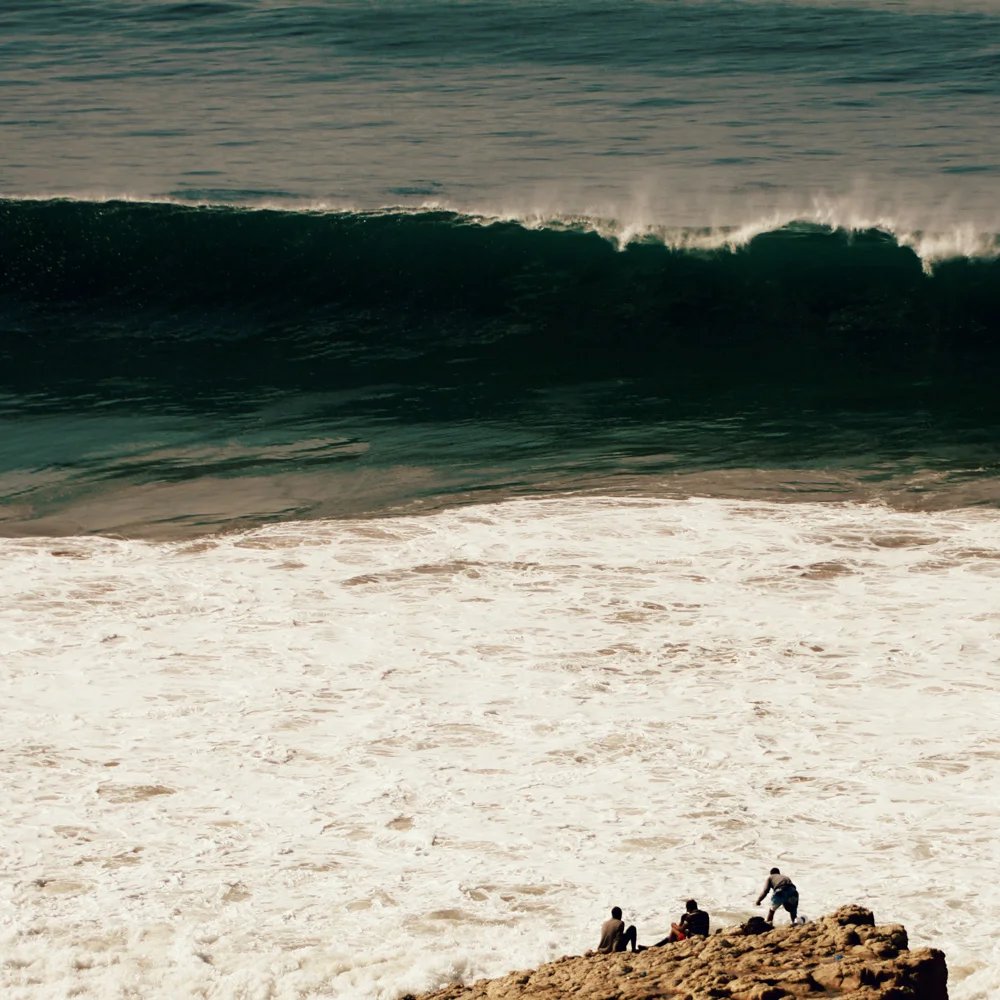
Killer Point starts working at about chest-high but it really shines when the North Atlantic swells hit two meters or more. It can hold size up to four or five meters, which is when the professional-level surfers show up from Taghazout. For a solid intermediate, a 1.5-meter swell at mid-tide is the sweet spot. At dead low tide, a section called 'the boil' becomes visible—it's a rock that sits right in the line of the wave. You have to know how to navigate around it.
Unlike Anchor Point, which gets incredibly crowded, Killers has more space because the paddle scares people off. This means you might get more waves, but you have to work twice as hard for them. The wave itself is a long right-hander that can section out. On the best days, you can ride for nearly 300 meters, ending up way down the point toward the town.
- Strong paddling stamina for a 15-minute sprint.
- Confidence on vertical take-offs in deep water.
- Ability to identify and avoid 'the boil' at low tide.
- A board with enough rail to hold in fast, heavy water.
Better alternatives for progressing surfers
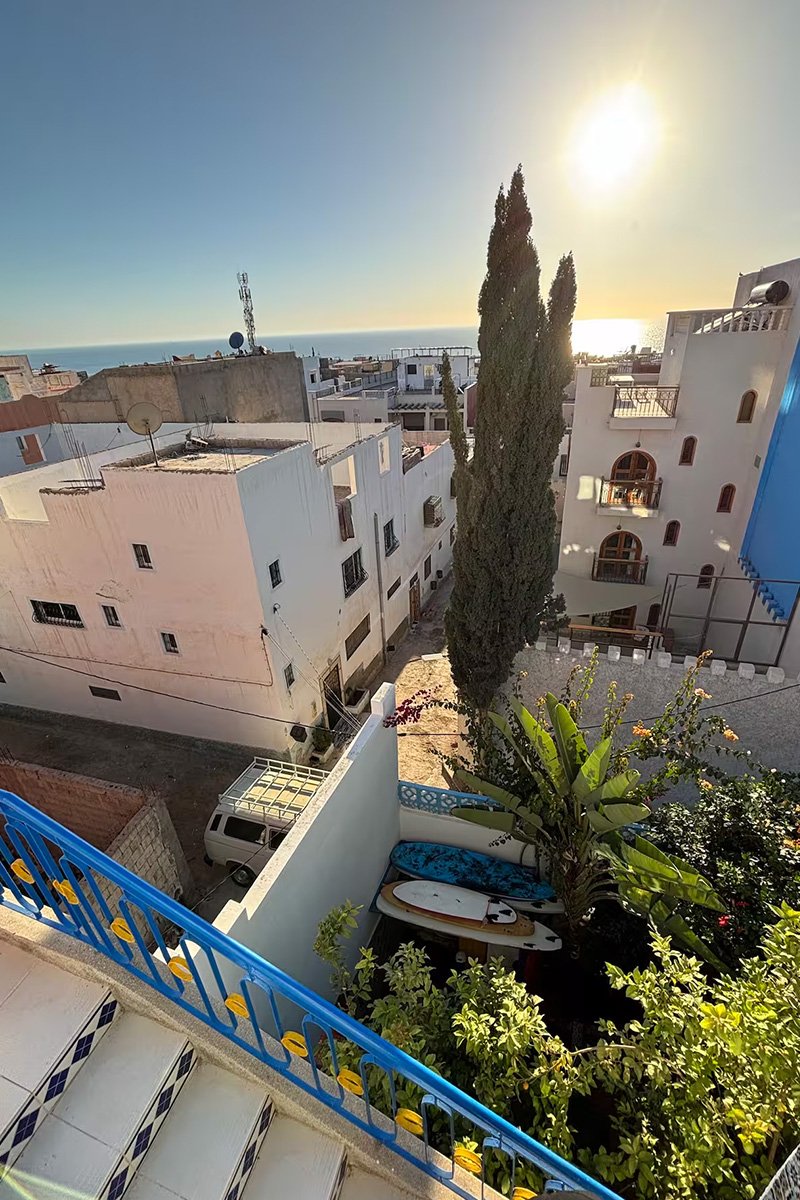
If the forecast shows a 2-meter swell and you are still working on your turns, we usually suggest staying in Tamraght. Places like Devil's Rock or Banana Point are a five-minute drive from our camp and offer much more forgiveness. At Banana Point, the right-hander is long but much softer. You get the point-break feel without the heavy consequences of hitting a rock shelf at Killer Point.
K11 and K12 are also great shouts for intermediates. They are about 10 minutes south of us. These spots are more consistent for those who want to practice maneuvers without the pressure of a localized peak or a dangerous entry. We usually charge about 30 euros for a guided day trip to these spots if the local Tamraght waves aren't hitting right.
People also ask
What is the water temperature in January?
The water temperature in January stays around 17 to 18 degrees Celsius. You will definitely need a 4/3mm wetsuit. The air is warm during the day, often 20 degrees, but as soon as the sun drops behind the cliffs, it gets chilly, so pack a hoodie for the evenings.
How long does it take to learn to surf at Killers?
Most surfers need at least two or three years of consistent practice before tackling Killer Point. It is not about how long you have been surfing, but how many waves you catch. You must be comfortable in overhead water and know how to turtle roll or duck dive effectively.
Is it safe to surf alone at Killer Point?
We don't recommend surfing Killers alone, especially if it is your first time. The current can pull you toward Anchor Point, and if you snap a leash, it is a long swim back to the beach through a lot of white water. Always go with a friend or a local guide.
Check the charts on Magicseaweed or Windguru before you head out. If the period is over 12 seconds and the height is over 1.5 meters, Killers will be firing. If that sounds intimidating, come talk to us at the camp and we will find a beach break that fits your level for the day.