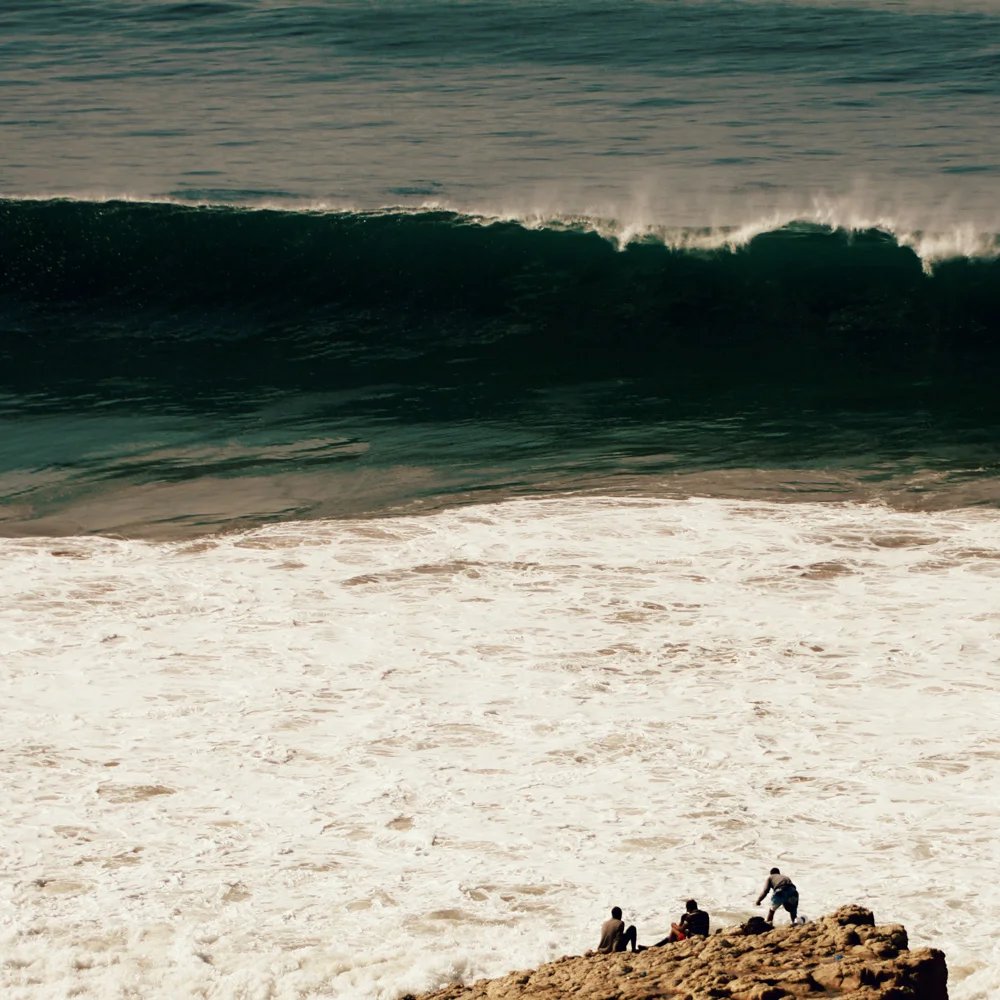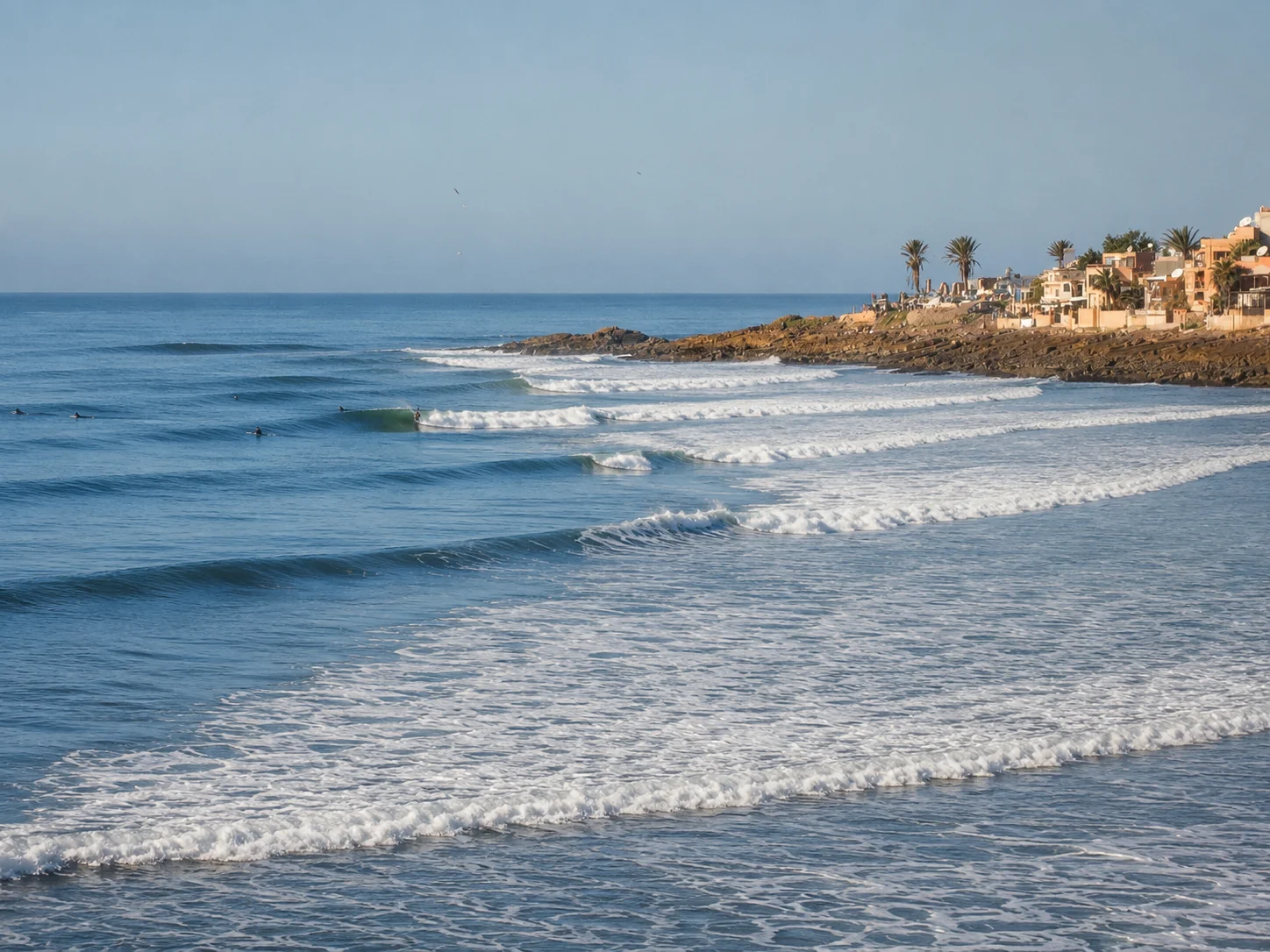
You see the spray blowing off the back of the sets from the coast road as you drive north from Tamraght. When the swell is over six feet and the wind is blowing lightly from the northeast, the white water at the tip of the point looks like it is moving in slow motion. This is Anchor Point. For many who visit our surf camp Morocco, this is the wave they have seen in magazines for thirty years. It is the yardstick by which all other right-handers in this region are measured. It is loud, it is crowded when it is on, and it has a history that goes back much further than the modern surf tourism boom.
We often tell our guests that Anchor Point is not a wave for a casual afternoon paddle if you are just starting out. It requires a certain level of fitness and a thick skin. But even if you are not ready to jump off the rocks yourself, sitting on the sandstone cliffs with a 15-dirham tea to watch the sets roll in is a staple part of the local routine. You are watching the same lines that surfers have been chasing here since the mid-sixties.
How a wooden anchor and a few Australians started it all
Before the 1960s, the coastline around Taghazout was mostly used by local tuna fishermen. There were no paved roads connecting these points, just dirt tracks that required a sturdy vehicle or a lot of patience. The story goes that a group of Australians were the first to really explore the point in 1967. They were traveling in a Land Rover, pushing south through Africa, and found a right-hand point break that seemed to peel forever along the rocks. They named it after an old wooden anchor that sat near the take-off zone, a remnant from the fishing trade that used to dominate the small cove nearby.
The transition from secret to center stage
By the 1970s, the secret was out. The hippy trail brought more travelers from Europe and America. They lived in vans parked right on the edge of the cliffs, back when you could camp anywhere without a permit. The vibe was different then—fewer people in the water, but also no infrastructure. If you broke your board or lost your fins, your trip was essentially over because there were no shops nearby to help you out. Our coaches sometimes talk to the older locals who remember those days; they describe a time when three people in the water felt like a crowd. Today, on a clean six-foot day, you might be sharing the peak with fifty others, but the mechanics of the wave remain unchanged.
The growth of Taghazout surf culture was built entirely around this one specific stretch of sand and stone. It is the reason the village transformed from a quiet fishing outpost into a global hub. While other spots like Killers or Boilers offer more power, Anchors—as we call it—is the one that offers the most technical length. On its best days, when the tide is low and the NW swell is hitting at the right angle, you can link three different sections into a single ride that lasts for over 500 meters.
What it is like to surf the point today
Surfing Anchor Point is as much about the entry and exit as it is about the wave itself. The jump-off is famous. You have to time your leap from the slippery rocks into a small keyhole of water between sets. If you mistime it, the surge will push you back into the jagged sandstone. It is a rite of passage that most of our advanced surfers at Nomad eventually face. Once you are out, you realize the wave is actually made of several distinct sections:
- The Peak: This is the steepest part, right off the point. It is where the pros sit and where the takeoff is most critical.
- The Steeple: A fast, hollow section that requires a lot of down-the-line speed to make it through.
- The Beach: Where the wave finally softens and rolls into the sandy bay towards the town.
The wave works best on a low to mid tide. If the tide is too high, the water bounces off the rocks and creates a backwash that can make the face of the wave wobbly and difficult to read. We usually suggest heading over about two hours before low tide to get the best of it. Just be prepared for the paddle back; there is a constant sweep that wants to pull you south towards the village, meaning your arms will get a serious workout even if you only catch a couple of waves.
"The first time you see a six-foot set wrap around that point, you realize why people drive across continents to get here. It’s not just a wave; it’s a heavy piece of moving ocean that demands respect."
Pro surfers and the contests that changed the game
For decades, Anchor Point was the backdrop for legendary surf films. In the early 2000s, films like "Postcards from Morocco" showed the world just how good the right-handers here could get. This drew the attention of the heavy hitters. We have seen the likes of Kelly Slater, Dane Reynolds, and Mick Fanning showing up in Tamraght and Taghazout when the charts look purple. They don't usually announce their arrival; they just appear in the lineup, making the technical sections look like child's play.
In 2020, the spot finally hosted its first major professional event: the Pro Taghazout Bay. This was a massive moment for the local community. Seeing guys like Frederico Morais and Kanoa Igarashi competing on a wave we surf every week brought a different energy to the coast. It proved that this wave could hold up under the pressure of a professional jersey. Morais ended up winning the event, showing that power surfing and big carves are what the judges—and the wave itself—reward most. Watching these guys handle the "washing machine" of the inner section at high speed gave everyone a new perspective on what is possible on this point.
Practical details for your visit
If you are staying with us in Tamraght, Anchor Point is about a 15-minute drive north. You can take one of the shared taxis for about 5 to 10 dirhams, or we can drop you off if our coaches are heading that way for a session. It is important to be realistic about the conditions. If the swell is small—under three feet—Anchor Point doesn't really work. It becomes a bit soft and loses its shape. In those cases, we usually look for other breaks that pick up more energy.
The best months to find the point in its true form are between November and March. This is when the North Atlantic sends those long-period swells down the coast. During the summer, the point is often flat or very small, which is why most serious surfers avoid the area in July and August. If you do go out, remember to respect the local hierarchy. The guys who live here year-round know the wave better than anyone, and they have seen thousands of tourists come and go. A bit of patience and a friendly nod go a long way in ensuring you actually get a wave in the crowd.
When you finish your session, there is a small café right on the rocks where you can get a coffee for about 20 dirhams. Sitting there, watching the sunset while your hair is still salty, is the best way to end the day. It doesn't matter if you caught the wave of your life or spent the whole time paddling against the current; being part of the history of this point is something that stays with you. Just make sure you wash the salt off your board and check your fins for any dings from the rocks before we head back to the camp for dinner.