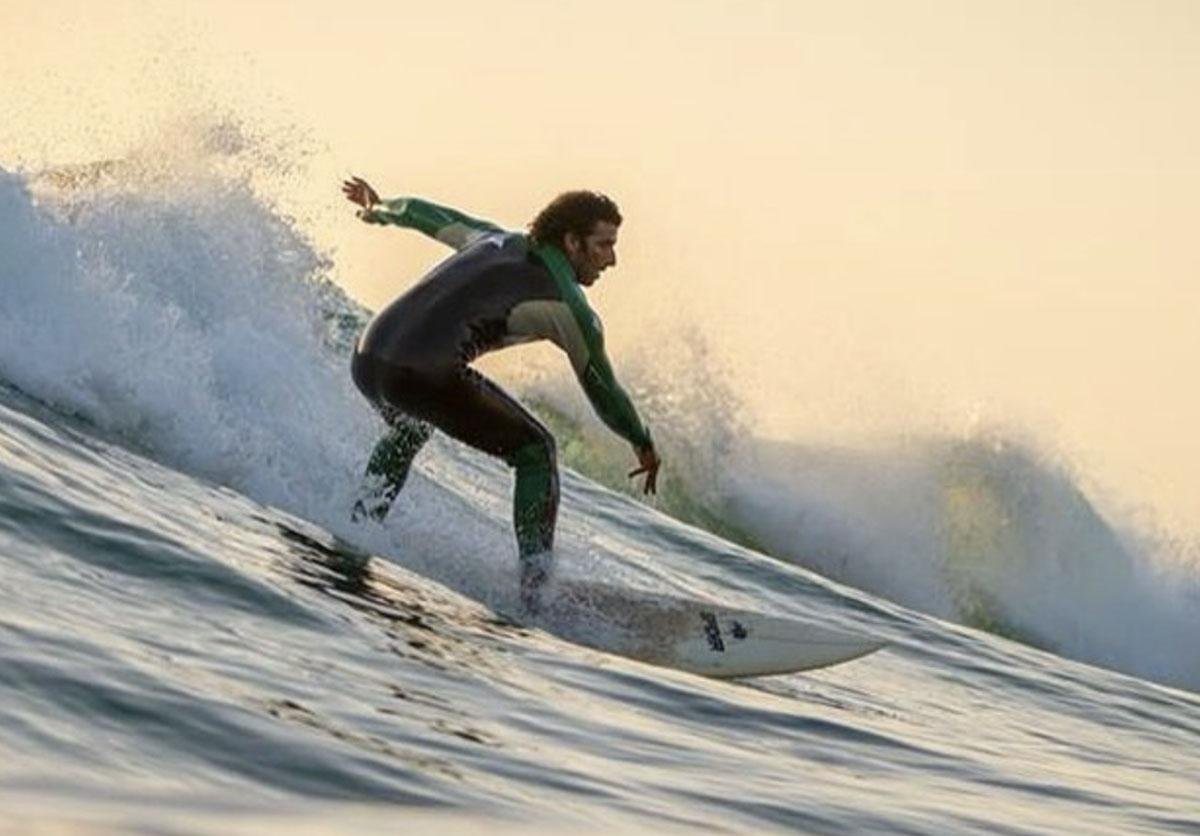
Devil's Rock: The Tamraght Home Break You'll Actually Surf
Everyone in Tamraght talks about Anchor. Nobody talks about Devil's Rock, which is weird, because Devil's Rock is the wave you'll actually paddle out at four mornings a week.
It's the closest surfable break to town, it works in summer when the rest of the coast is a lake, and it's forgiving enough that intermediates don't get spat out. If you're staying in Tamraght for two weeks, this is going to be your home break whether you planned it that way or not.
Where Devil's Rock actually is (and why the name)
Devil's Rock sits at the north end of Tamraght beach, right below the cliffs. Walk out of the village toward the ocean, hit the sand, turn right, and keep walking until you see a chunky rock formation sticking out of the water about 50 metres offshore. That's the devil. Ten minutes on foot from most of the riads in the old village, fifteen if you're up near the main road.
The name comes from the rock itself — locals call it Aghroud, but somewhere along the way a French surf guide decided "Devil's Rock" sounded better on a map and it stuck. Same wave, two names. Some people also lump it in with Banana Point Tamraght, which is technically the next reef down. They're close enough that on a good day the wave can wrap through both. On a bad day they're two separate mediocre peaks.
Point being: you don't need a van, a guide, or a surf school shuttle to get here. You walk. Which in Morocco, where every surf trip usually starts by piling into a Sprinter at 7am, is a small miracle.
Who Devil's Rock is actually for
Honest answer: solid beginners through low-advanced. It's a right-hand point-ish break over mixed reef and sand, and it breaks in a way that gives you a shoulder to work with rather than a closeout to survive.
If you can paddle into a shoulder-high wave unassisted, do a bottom turn, and not fall off on the way back up, you'll have a great time. If you're still popping up on whitewater at the surf school, you'll do fine on the inside section too — it reforms into something very rideable and there's usually space away from the peak.
Where it stops working is if you're chasing overhead barrels. Devil's Rock isn't that wave. Even on a good day it's a rolling, playful right that rewards flow more than power. Which is exactly why it beats Panga for most people — Panga is faster, shallower, meaner, and full of every visiting shortboarder in Taghazout. Devil's is chill.
When to paddle out: tides, wind, and the 11am rule
Here's the specific stuff guidebooks won't tell you.
Tides: Devil's Rock works best on a pushing mid tide. Dead low and you're surfing over exposed rock — sketchy. Dead high and the wave loses shape and mushes out on the inside. The sweet spot is roughly two hours either side of mid. Check the tide chart the night before, don't wing it.
Wind: This is the one that catches people out. Morning offshores hold until about 10:30 or 11am, then the alizé — the cross-onshore northerly that ruins everything from Tamraght to Agadir — kicks in like clockwork. By 11:30 the surface is chop. By noon it's unsurfable. This is why every honest surfer in Tamraght is in the water at 7am and eating msemen with amlou by 10.
The 11am rule is real. Set an alarm. If you're the type who likes a leisurely coffee at Anywhere Cafe before your session, you're going to miss the wave. Get up, surf, then have the coffee.
Why it beats Panga for most intermediates
Panga is the other Tamraght break everyone name-checks, and I'll say what most surf schools won't: for the average intermediate, Panga is not the play.
- The takeoff is steeper and less forgiving. Blow it and you're eating reef.
- It gets crowded fast with everyone from Taghazout and beyond who saw a forecast.
- The paddle out is harder and needs set-timing that most intermediates aren't reading yet.
- The wave rewards experience over technique — you can be a technically solid surfer and still not get anything at Panga because you don't know where to sit.
Devil's Rock, meanwhile, hands you a wave. You paddle, you're up, you have time to think about what to do with it. That's the level of stress you want on a surf holiday. Save Panga for week two, or for the day the swell finally goes head-high and Devil's is closing out.
Localism, crowd, and the vibe in the water
There basically isn't any localism at Devil's Rock. This isn't Anchor, where you'll get vibed by a Basque guy who's been camping in the parking lot for eleven weeks. It's a friendly wave with a mixed crowd of surf school students, camp guests, a few Moroccan surfers who grew up here, and the odd solo traveller who found it on Google Maps.
You will get dropped in on. Occasionally by someone who genuinely doesn't know the rules, more often by a surf school student who's just learning them. Take a breath. It's not that kind of wave and it's not that kind of spot.
The Moroccan surfers who ride here are, in my experience, some of the most generous locals on the whole coast. Wave them onto sets, say salaam, tip your instructor if you have one. The vibe stays good because everyone puts a little in.
Surfing Devil's Rock in summer: the flat-spell context
Now the important bit. If you're reading this in June, July, or August, you already know the deal: Moroccan surf in summer is quiet. Anchor is a lake most days. Killer is a lake. Boilers is a lake. The Atlantic goes into holiday mode along with everyone else.
Devil's Rock is one of the very few spots in the region that keeps producing rideable waves through the summer flat spell. It's more exposed and picks up any south or south-west swell energy that sneaks through, so it'll be waist to chest high when everywhere else is ankle-slappers. That's why it's the summer home break — not because it's the best wave, but because it's often the only wave.
Two weeks in Tamraght in August, you'll surf Devil's Rock for ten of those sessions and eat a lot of grilled sardines on the beach. That's the deal. If you came expecting Anchor in July, you got bad advice from your booking agent.
What to bring, what to know, what to eat after
Bring a 6'0" to 7'0" if you're intermediate — a shortboard works, but a step-up or mid-length gets you into more waves. Full 3/2 wetsuit November through April, spring suit or shorty May through October. Reef booties if you're paranoid about the rocks at low tide, though most people go barefoot.
Wax up on the beach, not in your riad — you'll just end up walking sand into it. Leave your phone at home; the walk down is short and there's nowhere secure to stash valuables in the sand.
Post-surf, the move is a tagine at one of the cafes on the main strip in Tamraght, or if you've earned it, a proper plate of fresh fish at the port in Taghazout for lunch. There's a guy on the beach who sells fresh msemen with honey and amlou some mornings. Get one. Thank me later.
FAQ
Is Devil's Rock good for beginners?
The inside section is genuinely one of the better beginner reforms in the region — soft, predictable, rolling. The outside peak is intermediate territory. Most surf schools in Tamraght use the inside for their students, and it works.
Do I need a car to get to Devil's Rock?
No. If you're staying in Tamraght village you walk. Ten to fifteen minutes down the beach with your board. That's the whole point — it's the wave you don't need a van for.
What's the best time of year to surf Devil's Rock?
Autumn (September to November) is peak — consistent swell, warm water, offshore mornings. Summer is when it earns its keep as the home break because everywhere else goes flat. Winter it works, but gets more powerful and less user-friendly for intermediates.
Is Devil's Rock the same as Banana Point?
Close but not the same. Banana Point is the next reef along and can link up with Devil's on the right swell. Different peaks, same beach, five-minute paddle between them.
How crowded does it get?
Busiest in the two-hour morning window before the wind turns, especially in high season. Twenty to thirty people in the water on a good summer morning is normal. Not Anchor-crowded, not Imsouane-crowded, but not empty either.